Hello everyone.
Today, I’d like to continue my series about the work of Japanese convenience store managers.
This time:
👉 product ordering.
To be honest:
many people probably imagine ordering as something simple.
Perhaps something like:
“The manager just clicks a button and orders products.”
However:
👉 the reality is much more complicated than that.
In fact:
👉 product ordering is one of the hardest jobs in a Japanese convenience store.
What Does “Product Ordering” Mean?
In Japanese convenience stores:
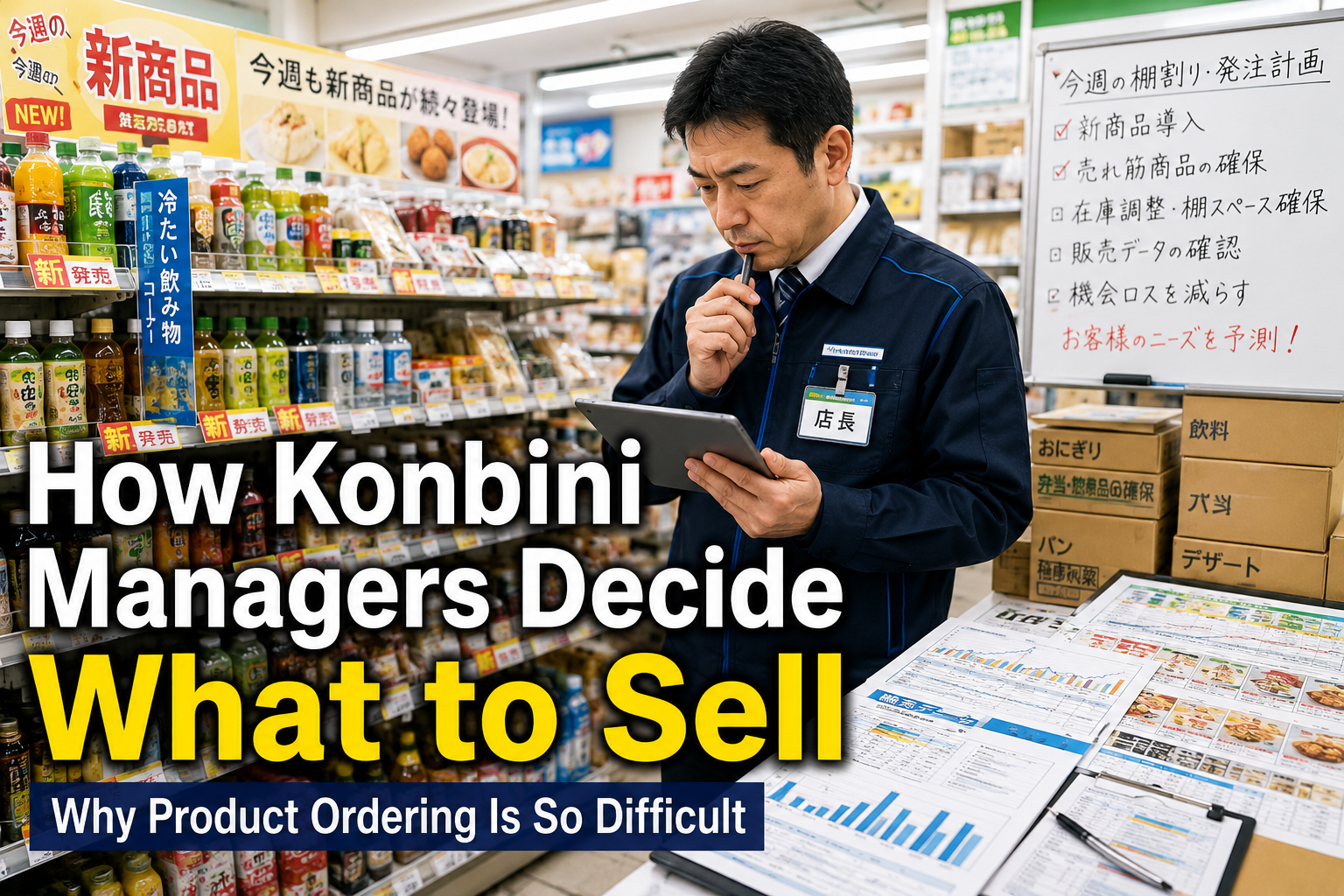
👉 managers must decide what products to bring into the store — and how many.
And this does not only include food.
Managers order almost everything, including:
- drinks
- snacks
- lunch boxes
- desserts
- daily necessities
- plastic bags
- cleaning supplies
- store equipment
In other words:
👉 almost everything you see inside the store must be managed.
And yes:
👉 this work happens almost every day.
It Is Much More Than “Just Ordering”
Many people imagine ordering as:
“Simply restocking products when shelves become empty.”
But in reality:
👉 good ordering requires constant prediction.
Managers must continuously think about things such as:
- weather forecasts
- seasons
- customer age groups
- office workers nearby
- tourist demand
- local events
- new product launches
- past sales history
For example:
if heavy rain is expected,
👉 fewer cold drinks may sell.
During hot summer days:
👉 ice cream and cold beverages may suddenly increase.
If a nearby office building holds an event:
👉 lunch sales may rise dramatically.
In other words:
👉 managers are constantly trying to predict customer behavior before customers even arrive.
How Long Does Ordering Take?
Here is something that surprises many people:
👉 careful product ordering can easily take more than five hours a day.
Yes.
Five hours.
This is because convenience stores carry:
👉 thousands of products across many different categories.
Each category requires separate decisions.
Fresh food, drinks, snacks, frozen food, daily necessities, and supplies all behave differently.
Because of this:
👉 many stores divide ordering work among experienced staff members.
For example:
one person may handle drinks,
another may handle snacks,
another may handle fresh food.
However:
👉 the final responsibility still belongs to the manager.
In the end:
the manager usually checks everything.
The Real Challenge: Making Space
Now comes one of the hardest parts.
Japanese convenience stores introduce:
👉 new products almost every week.
This creates a major problem:
👉 space is limited.
If new products arrive:
something else must disappear.
Managers constantly face difficult decisions such as:
“Which products should stay?”
“Which products should be removed?”
And there is another challenge.
Stores often want:
👉 new products to stand out.
So instead of displaying only one item:
stores may place several rows of the same new product to attract customer attention.
But that means:
👉 older products may need to be removed to make room.
In other words:
👉 convenience store shelves are constantly changing.
Timing Is Extremely Important
Managers cannot wait until the last minute.
Usually:
👉 product cuts are decided about a week before new products arrive.
Because if decisions are delayed:
👉 there simply will not be enough shelf space.
And remember:
👉 this process repeats almost every week.
Why Managers Cannot Do Everything Alone
Honestly:
👉 trying to do all of this alone is inefficient.
And usually:
👉 it leads to worse decisions.
That is one reason why:
👉 staff training becomes extremely important.
Good employees help managers handle complicated work more efficiently.
And honestly:
👉 finding and training good staff may be even harder than product ordering itself.
In the next article:
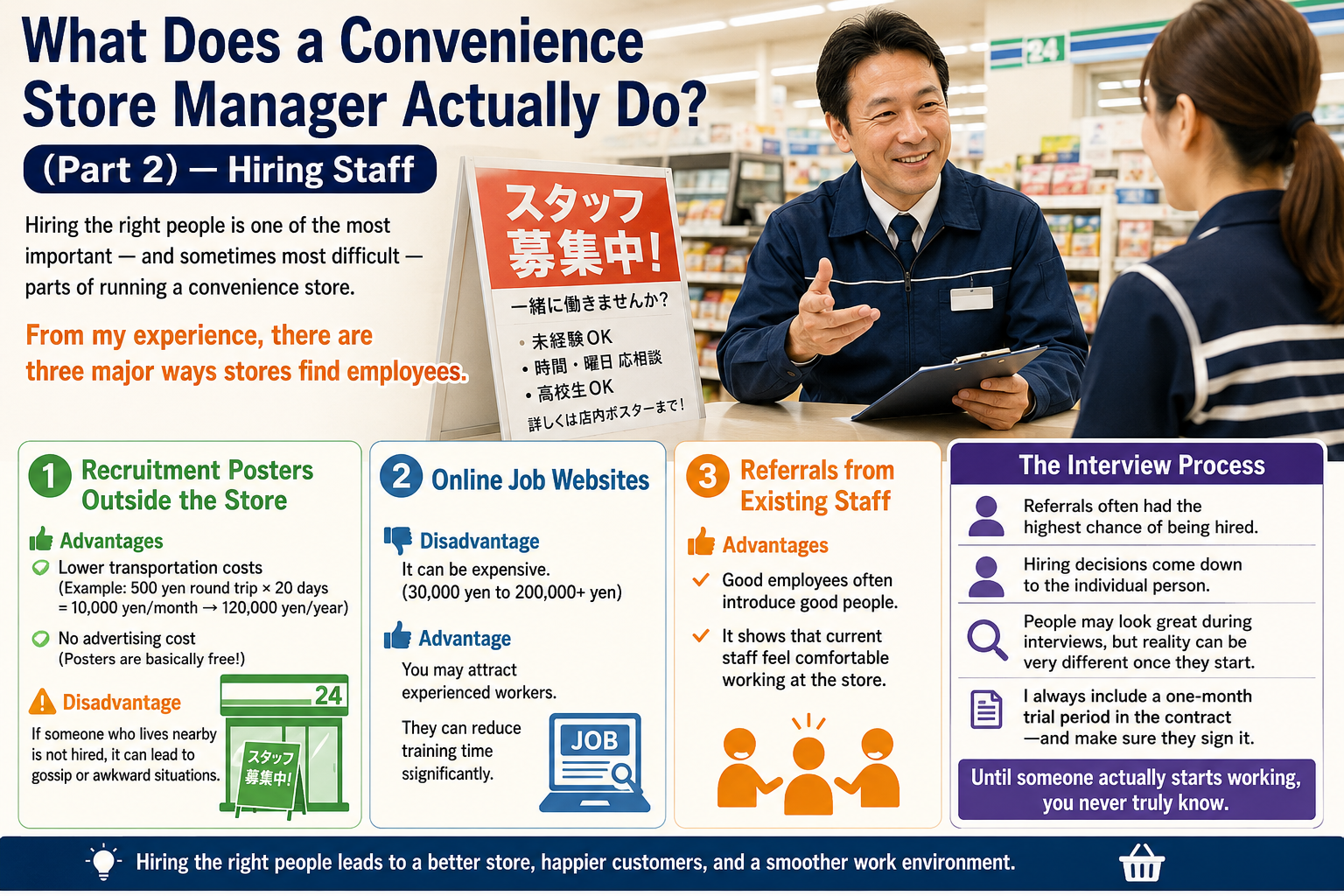
👉 I’ll explain staff hiring and training in Japanese convenience stores.
Thank you for reading, and see you next time!
Related Articles
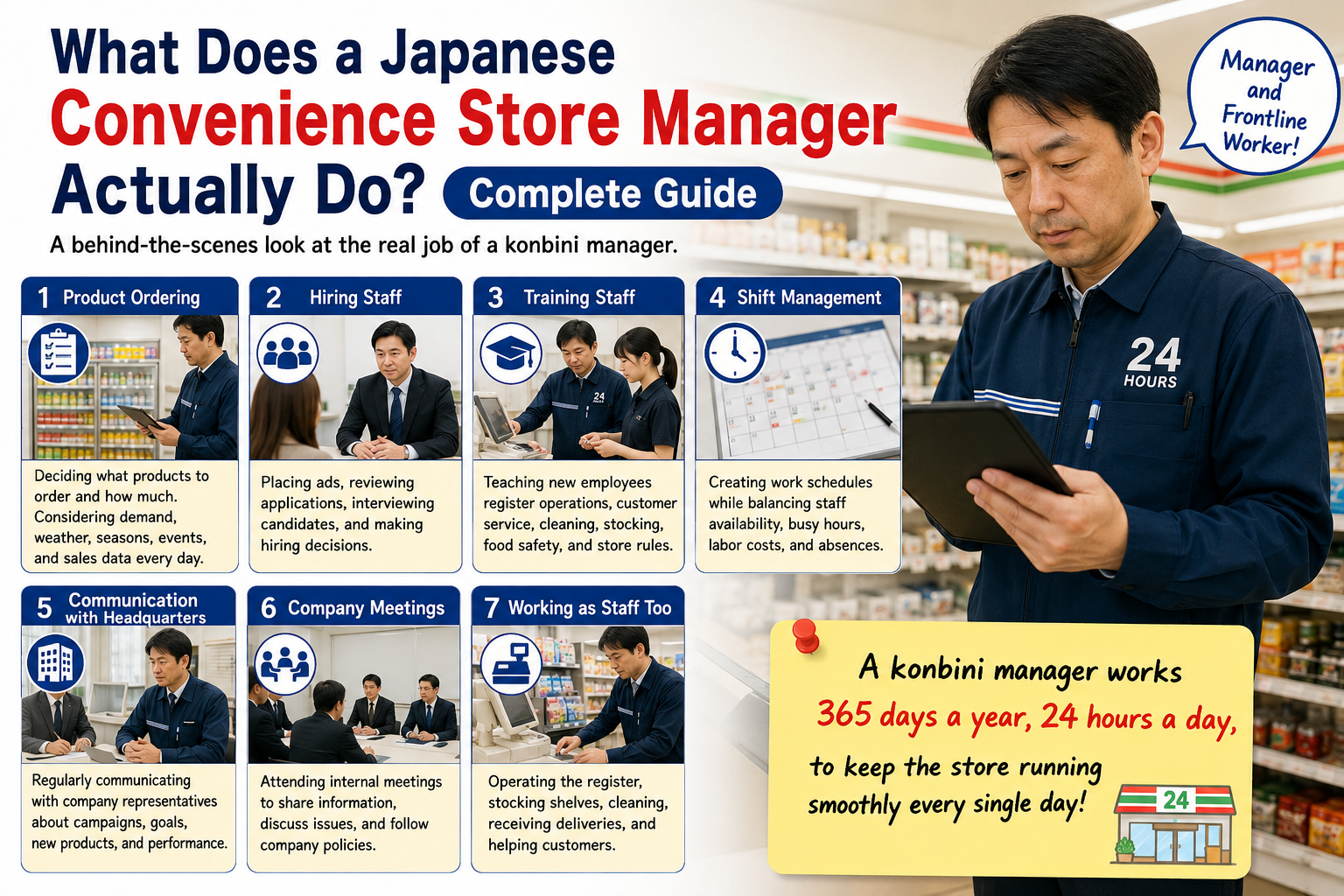
- What Does a Japanese Convenience Store Manager Actually Do? — A Complete Guide
A complete overview of what convenience store managers actually do behind the scenes. - How Deliveries Work at Japanese Convenience Stores (A Simple Guide)
How products are delivered several times a day and why ordering decisions matter so much. - Why Every Japanese Convenience Store Suddenly Sells the Same Product
Why convenience stores constantly introduce new products and how limited shelf space creates difficult decisions.
コメント