Hello everyone.
Today, I’d like to talk about something many foreign visitors occasionally notice at Japanese convenience stores:
👉 “Why does the cashier pack my bag so slowly?”
In some countries, cashiers move extremely fast and simply throw products into the bag as quickly as possible.
So when visiting Japan, some people are surprised and think:
👉 “Why is this taking so long?”
Today, I’d like to explain this from the perspective of someone who has worked in convenience stores for many years.
First: Yes, It May Actually Feel Slow
To be fair:
👉 from the customer’s point of view, it may genuinely feel slow.
Especially if you are in a hurry.
You may wonder:
“It’s just putting items in a bag… why does it take so long?”
The answer is actually quite simple.
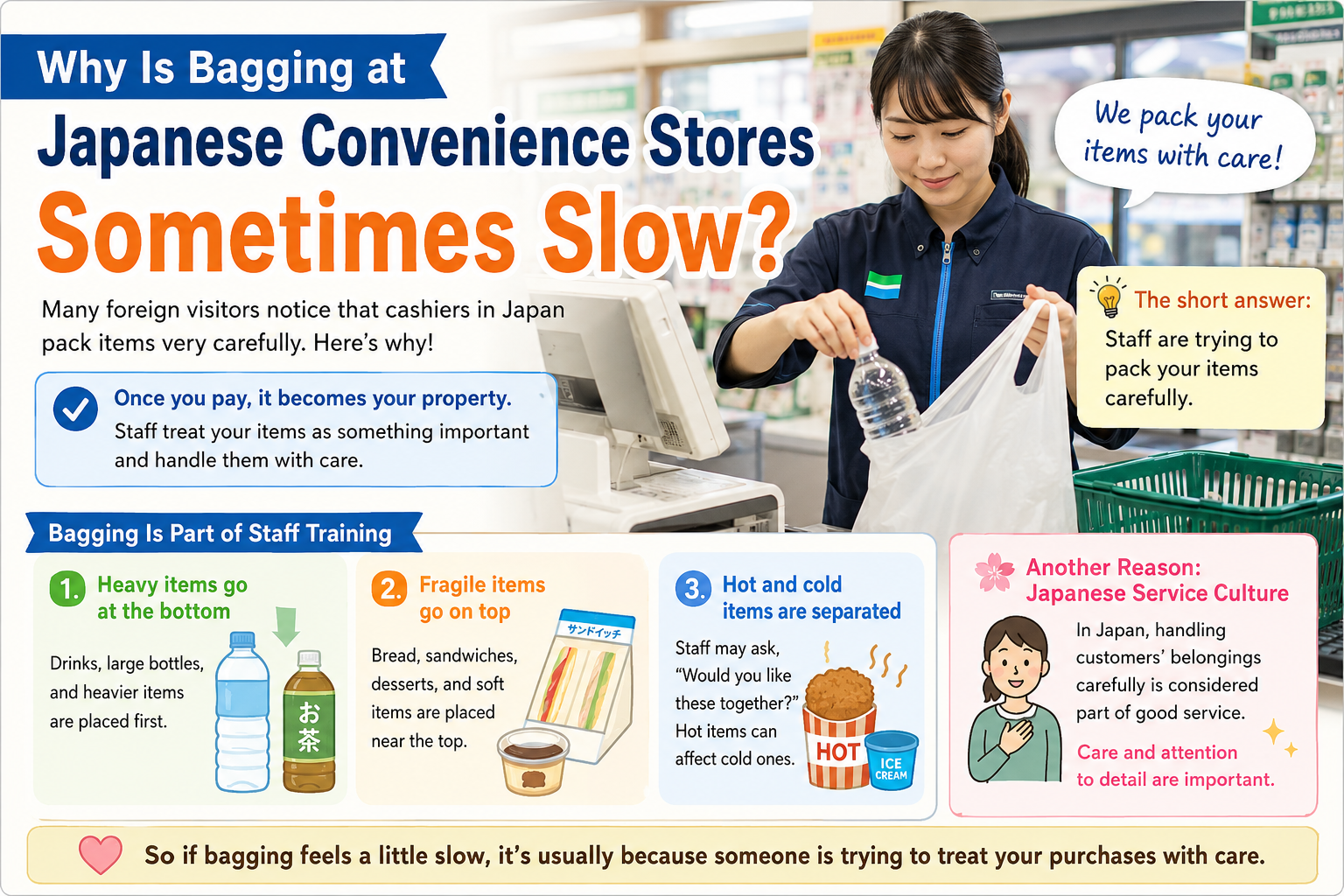
Once You Pay, It Becomes Your Property
The moment payment is completed:
👉 the products officially become yours.
This may sound obvious, but for store staff, this changes how we think.
When people pack their own belongings:
👉 they often do it quickly without much thought.
But imagine packing:
- someone else’s lunch
- fragile desserts
- drinks that might leak
- bread that can easily be crushed
Most people naturally become more careful.
Convenience store staff think the same way.
Because of this:
👉 many employees try to pack purchases carefully rather than simply as fast as possible.
Bagging Is Actually Part of Staff Training
Many people imagine bagging as something simple:
👉 “Just put everything into the bag.”
However, in Japanese convenience stores:
👉 basic bagging techniques are often taught during training.
For example:
Heavy Items Go at the Bottom
Drinks, bottled products, and heavier items are usually placed first.
This helps prevent lighter products from getting crushed.
Fragile Items Go on Top
Items such as:
- sandwiches
- soft bread
- cakes and desserts
are usually placed near the top to avoid damage.
Nobody wants a crushed cream sandwich.
Hot and Cold Items Are Often Separated
Staff may ask:
👉 “Would you like these together?”
There is a reason for this.
Hot fried food can affect:
- cold drinks
- ice cream
- chilled desserts
Even when customers say:
👉 “It’s okay together.”
many staff members still try to organize the inside of the bag carefully.
Another Reason: Japanese Service Culture
There is also a cultural reason.
In Japan:
👉 handling customers’ belongings carefully is considered part of good service.
Even small actions matter.
Many employees feel responsible for making sure products arrive safely in good condition.
Because of this:
👉 some staff naturally prioritize care over speed.
So, Why Does It Feel Slow?
The short answer is:
👉 many staff members are simply trying to pack your items carefully.
Of course:
- some workers are faster than others
- some employees are still learning
- busy stores may move more quickly
But in many cases:
👉 what feels “slow” is actually an effort to avoid damaging your purchases.
So next time bagging at a Japanese convenience store feels a little slow:
you may simply be watching someone trying to treat your items with care.
See you next time!
Related Articles
- What Do Convenience Store Register Staff Actually Do?
What register staff actually do behind the scenes — and why their job is more complicated than it looks. - What Customers Mean to Me
My personal philosophy about customer service after more than 30 years in convenience stores. - What Is a Japanese Convenience Store Shift Like? (Full Guide)
A full-day look at how Japanese convenience stores operate and why staff are constantly multitasking.
コメント