Hello everyone.
Today, I’d like to introduce something that many people never see behind the scenes of Japanese convenience stores:
👉 the real job of a convenience store manager.
Many visitors to Japan are surprised by how efficient Japanese convenience stores are.
Shelves are fully stocked.
Stores are clean.
Fresh food arrives several times a day.
Staff work quickly.
And many stores operate 24 hours a day.
But have you ever wondered:
👉 who keeps all of this running?
Behind the scenes, someone must manage the entire operation.
That person is:
👉 the store manager.
Many people outside Japan may imagine a manager sitting in an office and simply supervising staff.
However, in Japanese convenience stores:
👉 the reality is often very different.
To be honest:
👉 explaining everything a convenience store manager does would probably require an entire book.
So today:
👉 I’d like to give a general overview.
In future articles, I will explain each responsibility in more detail and eventually turn this into a complete guide series.
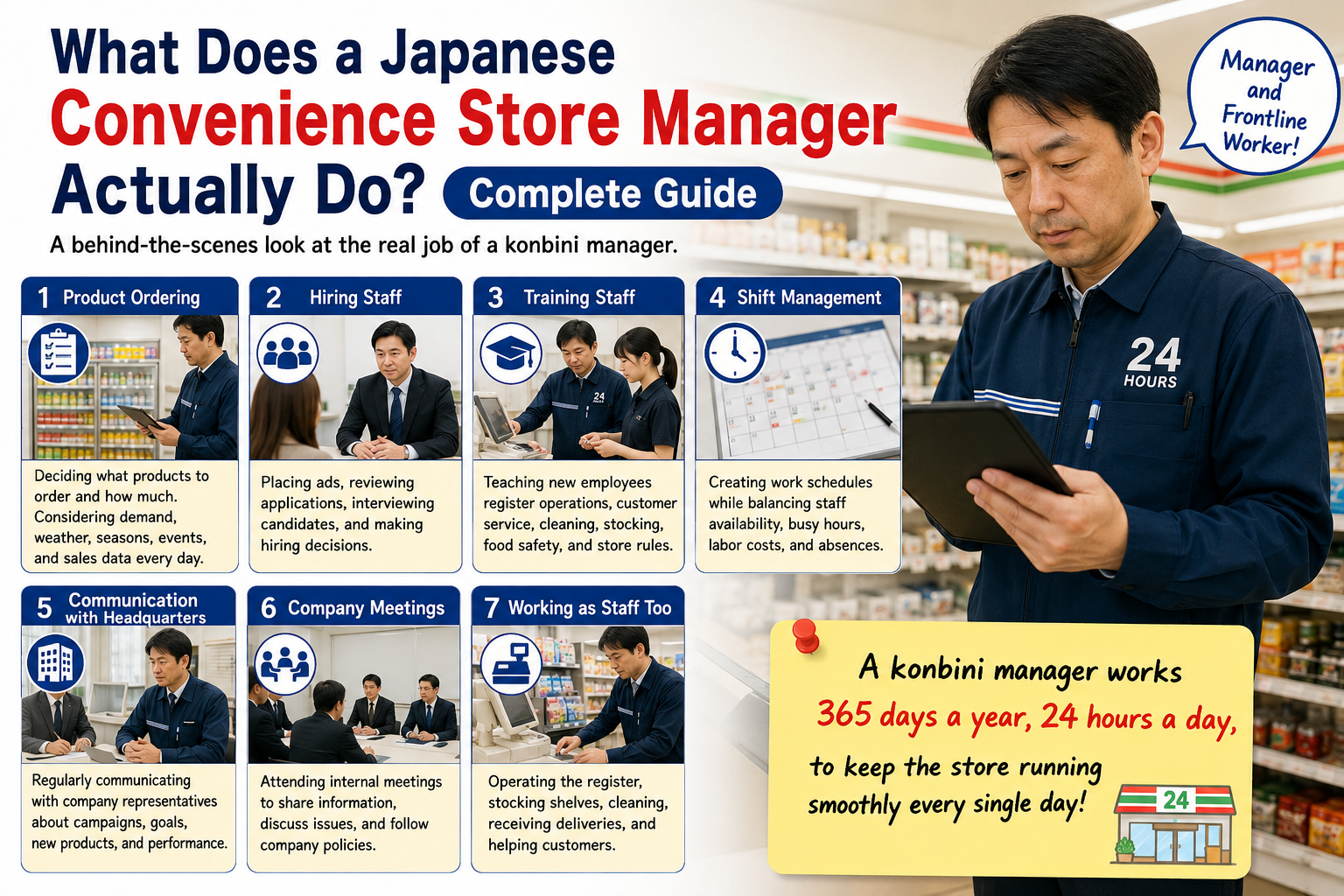
1. Product Ordering
One of the most important jobs is:
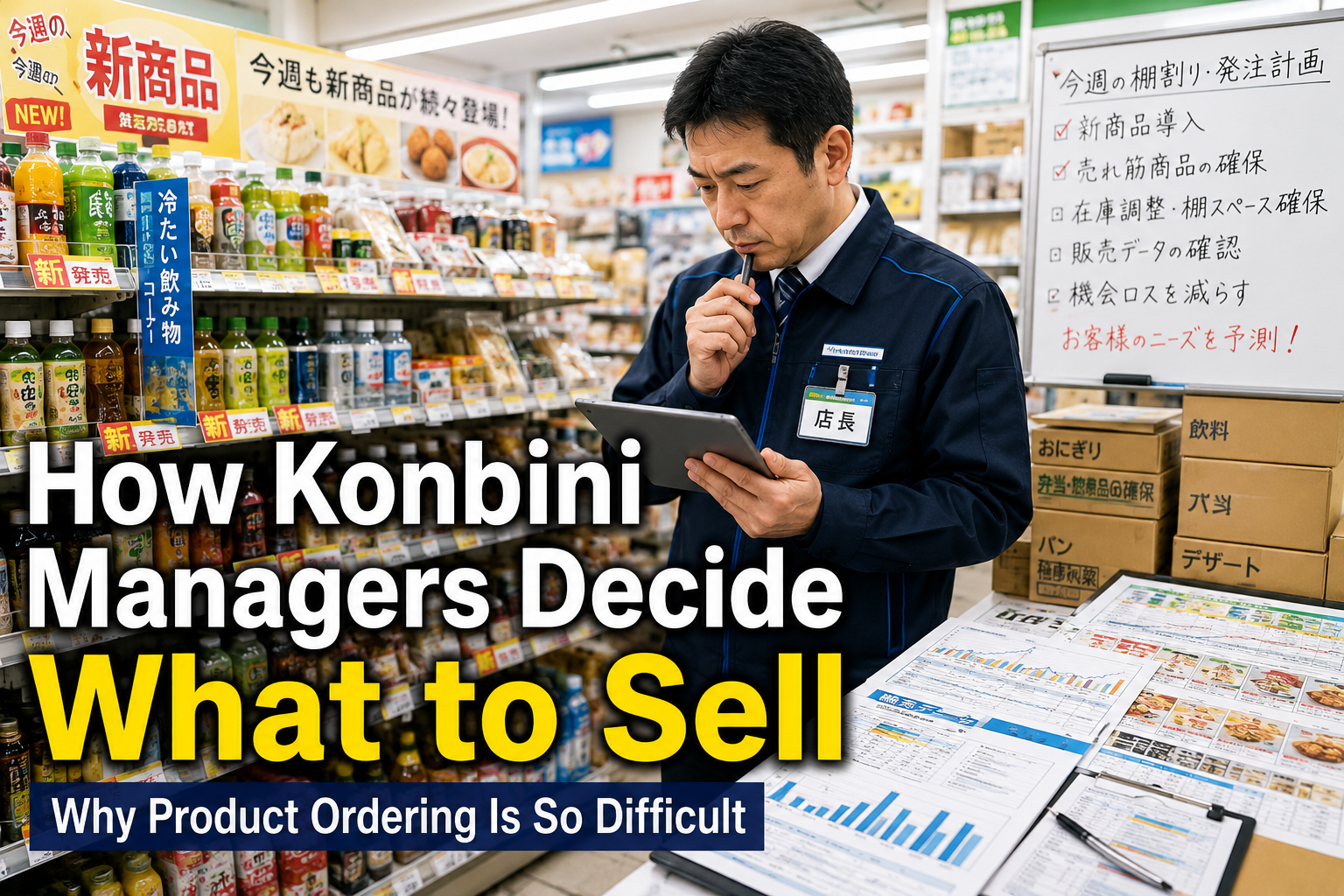
👉 deciding what products to order — and how much.
This may sound simple, but it is actually very complicated.
Managers must constantly think about things such as:
- customer demand
- weather conditions
- seasonal trends
- sales history
- new product releases
- local events
For example:
👉 hot weather may increase sales of cold drinks and ice cream.
👉 rainy days may reduce customer traffic.
👉 local festivals or nearby events may suddenly change demand.
Ordering too much creates waste.
Ordering too little causes lost sales.
In many stores:
👉 these decisions must be made almost every day.
2. Hiring Staff
Store managers are also often responsible for:
👉 recruiting and hiring employees.
This may include:
- placing job advertisements
- checking applications
- conducting interviews
- making hiring decisions
In many stores:
👉 the manager handles almost the entire hiring process.
In recent years:
👉 labor shortages have become a serious issue in Japan.
Because of this:
👉 finding reliable workers has become increasingly difficult for many stores.
3. Training Staff
After hiring comes training.
New employees must learn many things, including:
- how to use the register
- customer service
- cleaning procedures
- product stocking
- food safety
- store rules and systems
Some managers delegate training to senior staff.
However:
👉 personally, I believe managers should stay closely involved.
Why?
Because:
👉 poorly trained employees can easily create problems later.
Good training often makes a huge difference in store quality.
4. Labor Cost and Shift Management
Managers also create employee schedules.
This sounds simple, but honestly:
👉 it can be surprisingly stressful.
Convenience stores often operate:
👉 24 hours a day.
Someone must always be working.
Managers constantly adjust schedules while balancing:
- staff availability
- busy hours
- labor costs
- vacations
- sudden absences
Sometimes:
👉 managers must suddenly work extra shifts themselves when someone cannot come to work.
5. Communication with Headquarters
Most convenience stores in Japan belong to franchise systems.
Because of this:
👉 managers regularly communicate with company representatives.
At many stores:
👉 headquarters staff visit once or twice a week.
Topics may include:
- upcoming campaigns
- sales goals
- new products
- store performance
- operational improvements
Officially:
👉 stores and headquarters are supposed to work together as partners.
However:
👉 the reality can sometimes be more complicated.
I may discuss that topic in another article someday.
6. Company Meetings
In companies that operate multiple stores:
👉 managers may also attend internal meetings.
For example:
👉 companies that own several convenience stores often hold regular manager meetings.
These meetings may cover:
- sales performance
- staffing issues
- operational problems
- company policies
In reality:
👉 a company’s internal rules sometimes become more important than headquarters policies.
This depends heavily on the owner and management style.
7. Managers Also Work Like Regular Staff
This may surprise some people.
In many countries:
👉 managers mainly supervise employees.
However, in Japanese convenience stores:
👉 managers often work directly on the front lines.
When stores are busy or understaffed, managers may:
- operate the register
- stock shelves
- clean the store
- receive deliveries
- prepare hot snacks
- help customers directly
In other words:
👉 many convenience store managers are both managers and frontline workers at the same time.
Honestly:
👉 this is one reason the job can become extremely demanding.
Final Thoughts
So, what do you think?
To be honest:
👉 being a convenience store manager in Japan can be an extremely demanding job.
In many cases:
👉 one manager — sometimes with only a small number of employees — helps keep a convenience store running:
365 days a year.
24 hours a day.
And most customers never see what happens behind the scenes.
Starting from the next article:
👉 I will explain each responsibility in more detail from a real convenience store insider’s perspective.
See you next time.
Related Articles
- What Do Convenience Store Register Staff Actually Do?
What register staff actually do — and why store operations are much more complex than they look. - What Is a Japanese Convenience Store Shift Like? (Full Guide)
A full-day look at how Japanese convenience stores operate and how different shifts work together. - The Real Relationship Between Japanese Convenience Store Owners and Headquarters
A behind-the-scenes look at the relationship between store management and convenience store headquarters.
コメント