Hello everyone.
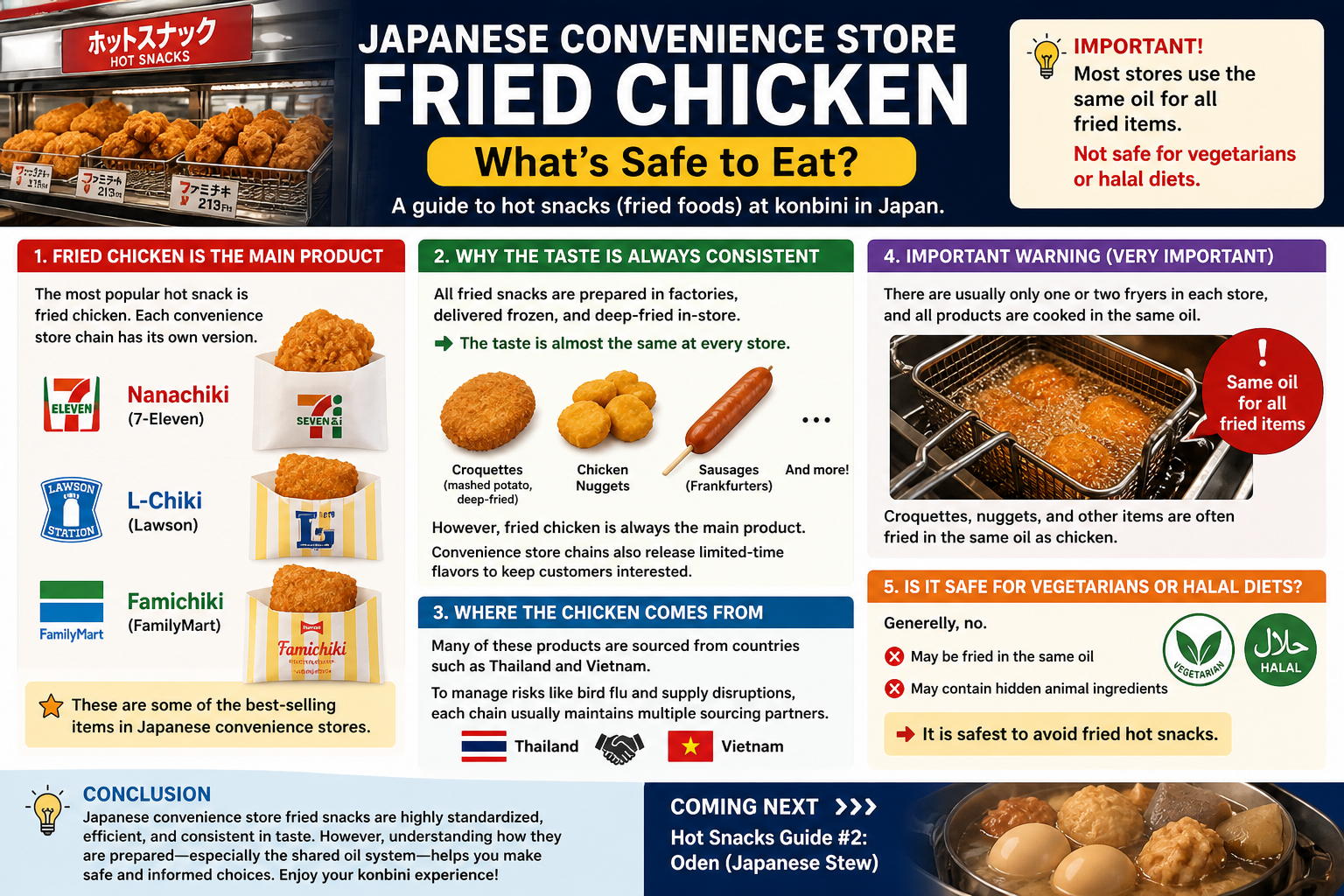
Today, I’ll explain “hot snacks” at Japanese convenience stores—especially fried foods.
If you’ve ever visited a convenience store in Japan, you’ve probably noticed fried items displayed near the cashier.
These are called “hot snacks.”
Besides fried foods, this category also includes items like oden (Japanese stew) and steamed buns, but I’ll cover those in another article.
1. Fried Chicken Is the Main Product
The most popular hot snack is fried chicken.
Each convenience store chain has its own version:
- 7-Eleven: Nanachiki
- Lawson: L-Chiki
- FamilyMart: Famichiki
👉 These are some of the best-selling items in Japanese convenience stores.
2. Why the Taste Is Always Consistent
All fried snacks are:
👉 Prepared in factories
👉 Delivered frozen
👉 Fried in-store
Because of this system:
👉 The taste is almost identical at every store
Other items include:
- Croquettes (potato, deep-fried)
- Chicken nuggets
- Sausages (frankfurters)
However, fried chicken is always the main product.
3. Where the Chicken Comes From
Many products are sourced from countries such as:
- Thailand
- Vietnam
To manage risks like bird flu or supply issues,
chains usually maintain multiple suppliers.
4. Important Warning (Very Important)
This is something many foreign visitors don’t know:
👉 Most stores use the same oil for all fried items
There are usually only one or two fryers, and they are shared.
This means:
👉 Croquettes, nuggets, and other items are often fried in the same oil as chicken
5. Is It Safe for Vegetarians or Halal Diets?
👉 Generally, no
Even if an item contains no visible meat:
- It may be fried in the same oil
- It may contain hidden animal ingredients
So if you:
- Follow a vegetarian diet
- Require halal food
👉 It is safest to avoid fried hot snacks
Conclusion
Japanese convenience store fried snacks are:
- Highly standardized
- Efficient
- Consistent in taste
However, understanding how they are prepared—especially the shared oil system—is important.
👉 This knowledge helps you make safe and informed choices.
Related Articles
- Japanese Beer at Convenience Stores: Why Are the Prices So Different?
Popular convenience store drinks that many customers buy together with hot snacks and fried foods. - Convenience Store vs Supermarket in Japan — Which Should You Use?
Why convenience stores specialize in quick hot foods and single-serving meals. - What You Can Actually Buy at a Japanese Convenience Store (More Than Just Food)
A look at the surprisingly wide range of products and services offered by Japanese convenience stores.
コメント