Hello everyone.
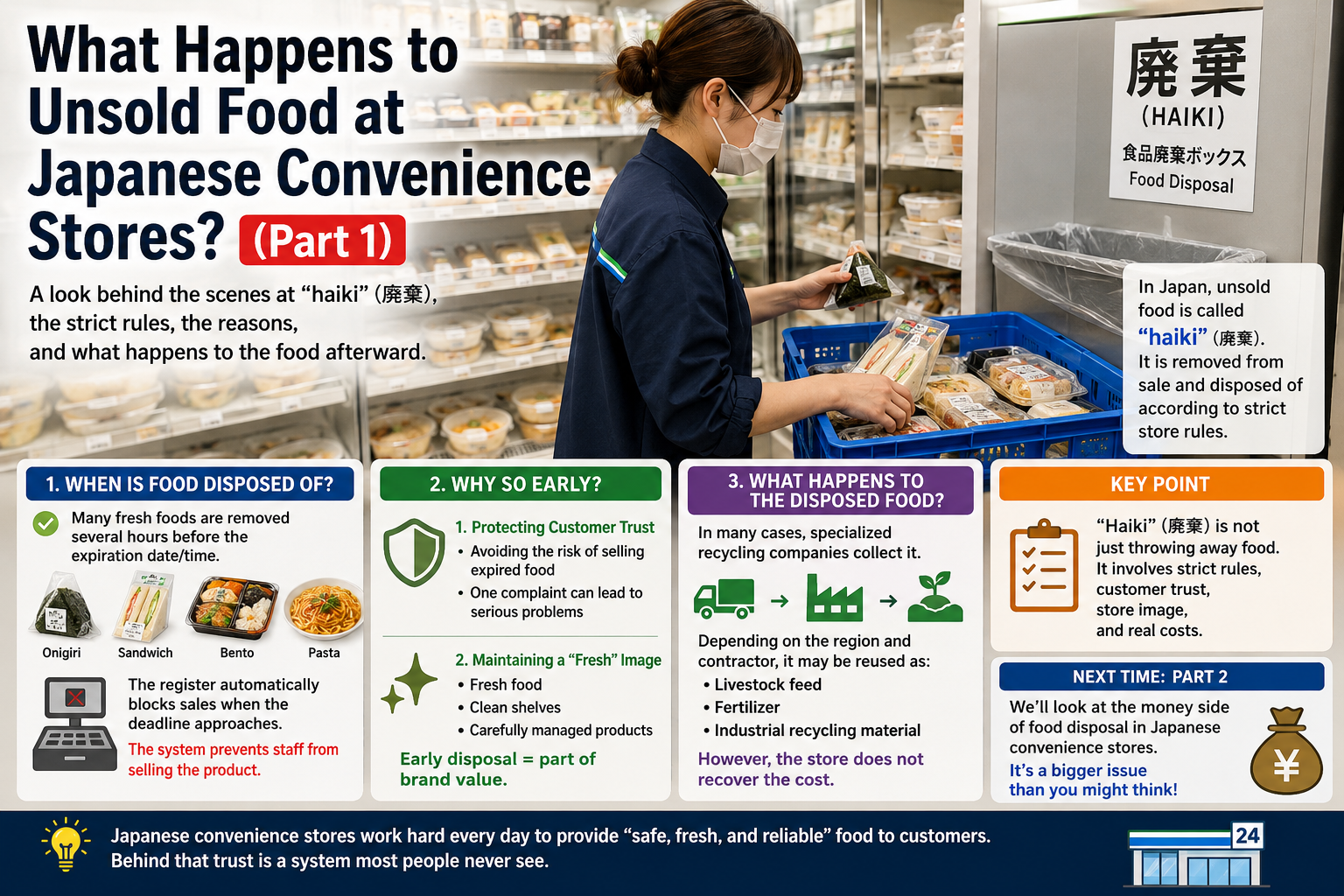
Have you ever wondered what happens to unsold sandwiches, lunch boxes, and rice balls at Japanese convenience stores?
Many people imagine that stores simply keep selling food until it expires.
But in Japan:
👉 that is usually not how convenience stores work.
Today, I’d like to talk about something very important behind the scenes of Japanese convenience stores:
👉 food disposal.
In Japan, convenience stores use the word:
👉 “haiki” (廃棄)
This refers to products that are removed from sale and discarded because they are too close to their expiration or freshness deadline.
In Part 1, I’d like to explain:
- when products are disposed of
- why this happens so early
- and what happens to the food afterward
What Is “Haiki” in Japanese Convenience Stores?
Many people think food disposal simply means:
👉 “throwing away expired food.”
However, Japanese convenience stores are usually much stricter than that.
In many cases:
👉 products are removed before the expiration date or freshness deadline shown on the package.
For example:
- rice balls (onigiri)
- sandwiches
- lunch boxes (bento)
- fresh pasta meals
Depending on the product, many fresh foods are removed from sale several hours before the printed expiration time.
At that point:
👉 the register system automatically blocks the sale.
When staff scan the barcode, the register displays an expiration warning and refuses the transaction.
This system mainly applies to fresh food products.
Long-life products such as:
- cup noodles
- snacks
- canned drinks
usually do not have automatic register restrictions.
However:
👉 even these products may still be removed early according to convenience store company standards.
For example, some long shelf-life products may be taken off shelves around one month before their official expiration date.
Why Do Japanese Convenience Stores Dispose of Food So Early?
There are several reasons.
1. Protecting Customer Trust
One of the biggest reasons is:
👉 avoiding the risk of accidentally selling expired food.
Japanese consumers are often very sensitive about expiration dates.
Even a single expired product can sometimes lead to:
- serious complaints
- angry phone calls
- reports made directly to company headquarters
Because of this:
👉 convenience stores generally prefer to remove products early rather than take unnecessary risks.
2. Maintaining a “Fresh” Image
There is another important reason:
👉 image.
Japanese convenience stores work very hard to maintain the impression that:
- food is fresh
- shelves are clean
- products are carefully managed
Many customers unconsciously trust convenience stores because of this system.
So in a way:
👉 early food disposal is also part of convenience store branding in Japan.
What Happens to the Disposed Food?
Many people imagine that discarded food simply becomes garbage.
But in many cases:
👉 specialized recycling companies collect the food.
Depending on the region and contractor, some of it may later be reused as:
- livestock feed
- fertilizer
- industrial recycling material
However:
👉 this does not mean convenience store owners recover the financial loss.
In most cases, disposal is treated as:
👉 a direct loss for the franchise store.
And this becomes a very important issue in store management.
So next time, in Part 2:
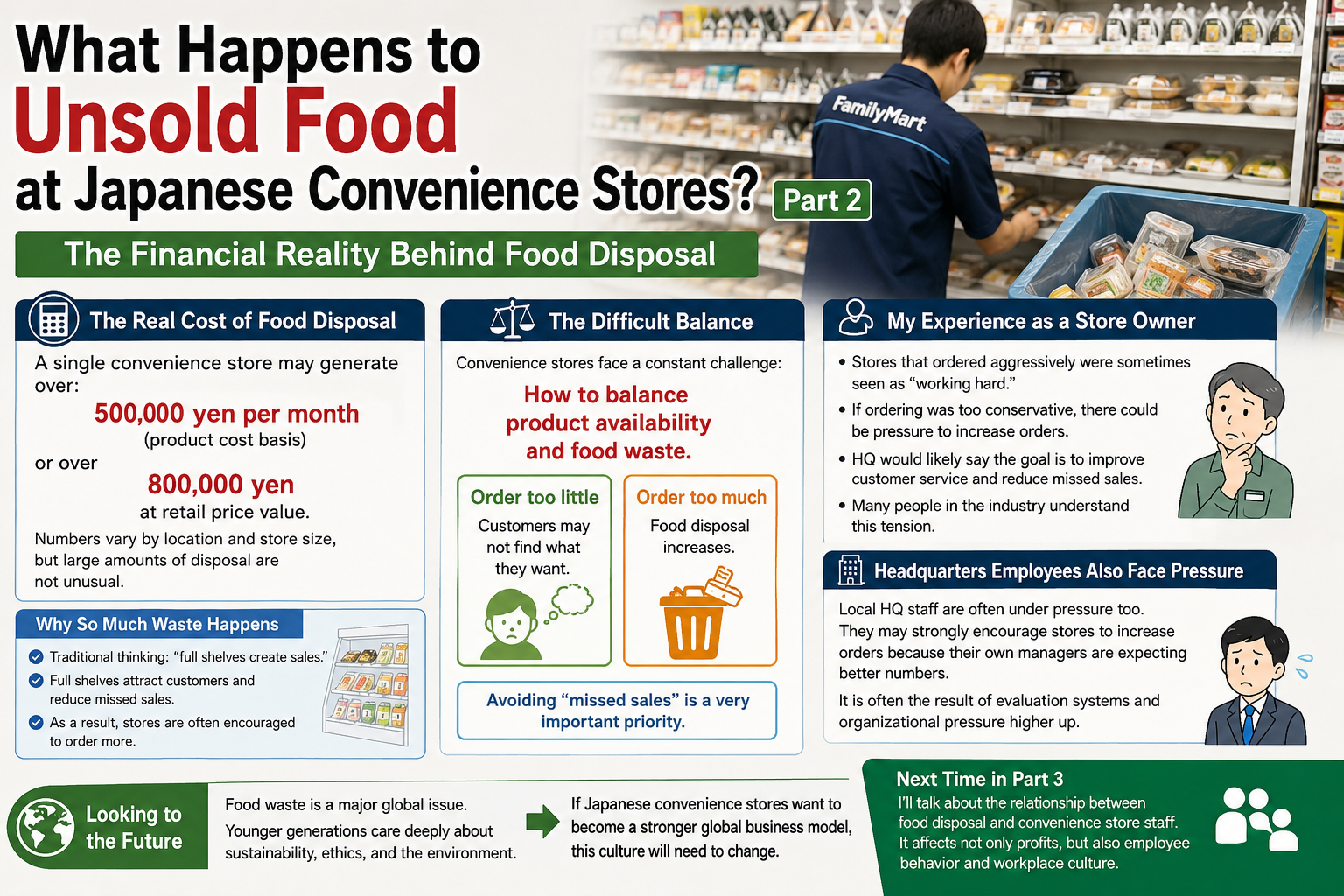
👉 I’d like to explain the money side of food disposal in Japanese convenience stores.
Because honestly:
👉 disposal costs are one of the biggest hidden pressures in the convenience store business.
Related Articles
- What Happens to Unsold Food at Japanese Convenience Stores? (Part 2)
The financial reality of food disposal and why disposal costs become a major pressure for convenience store owners. - How Deliveries Work at Japanese Convenience Stores (A Simple Guide)
How products are delivered multiple times a day and why convenience stores prioritize freshness. - Why Japanese Convenience Stores Are So Efficient
One major reason Japanese convenience stores feel so efficient: fast product turnover and tightly controlled inventory systems.
コメント