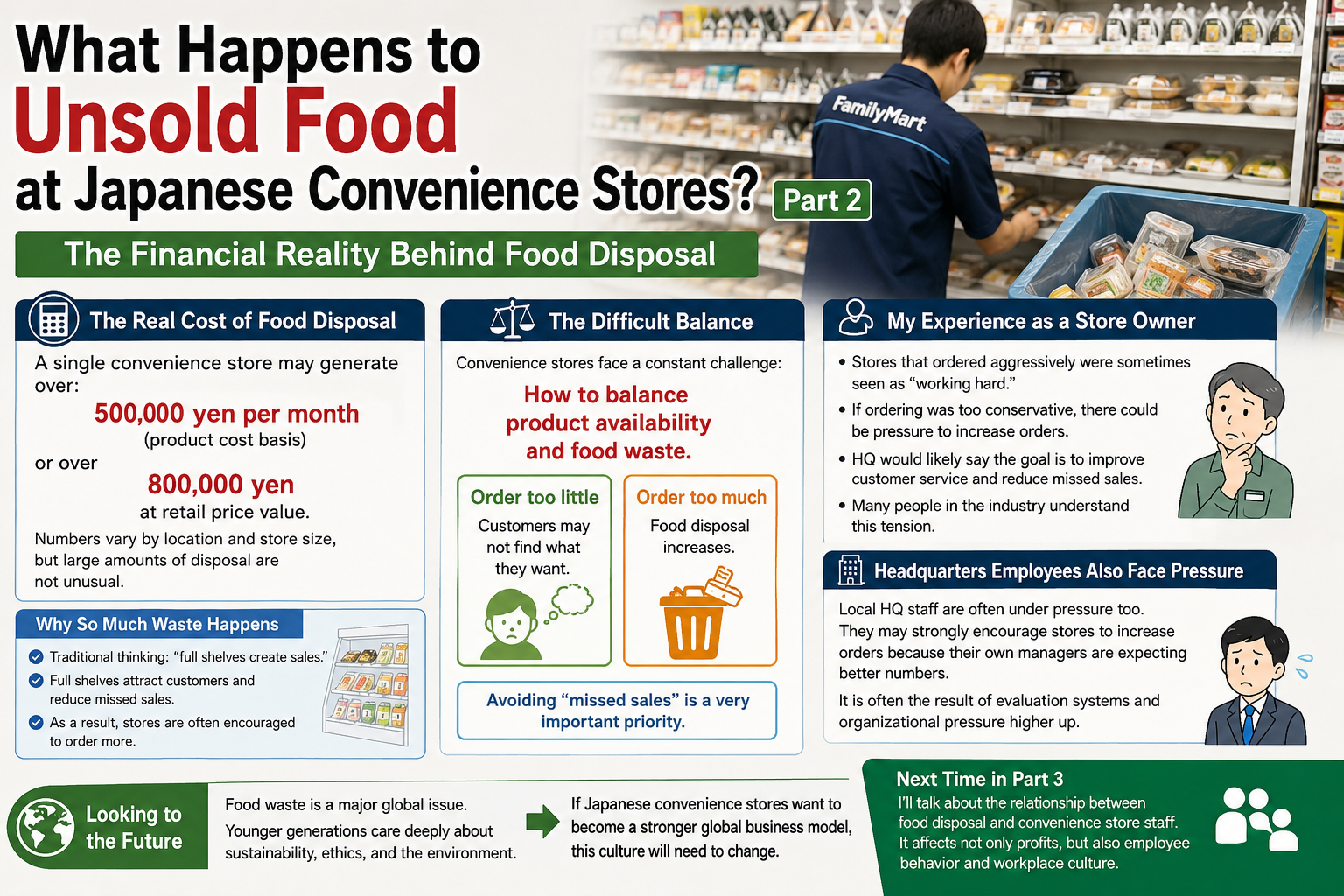
The Financial Reality Behind Food Disposal
Hello everyone.
Today, I’d like to continue talking about food disposal in Japanese convenience stores.
In Part 1, I explained:
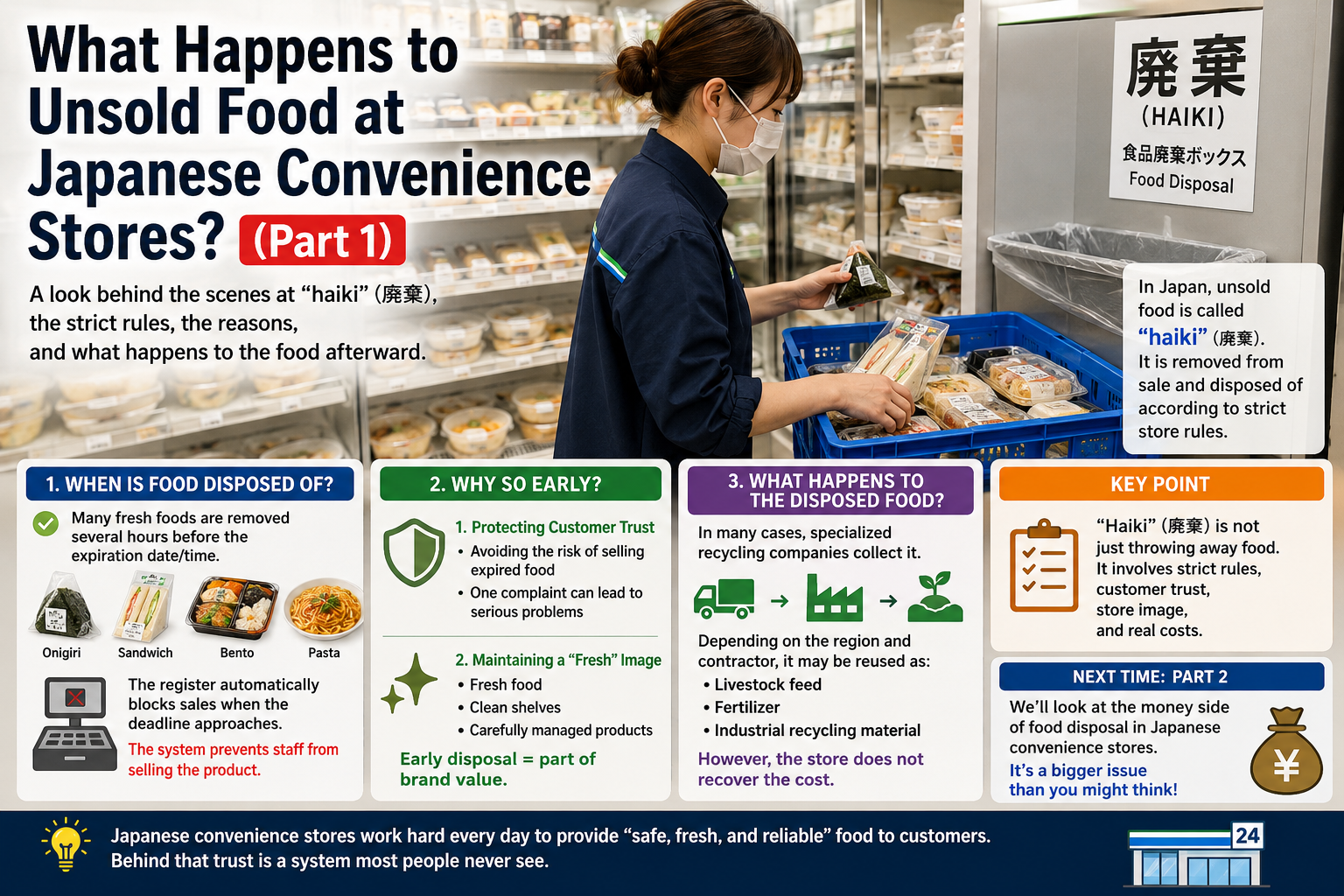
👉 why convenience stores remove products early,
👉 how expiration control works,
👉 and what happens to unsold food afterward.
But today, I’d like to talk about something more complicated:
👉 the financial side of food disposal.
“Surely They Try to Avoid Waste, Right?”
Most people probably assume:
👉 convenience stores try to keep food waste as low as possible.
That would be the normal expectation.
However, the reality can be more complicated.
From what I have personally seen over many years in the industry:
👉 a single convenience store may sometimes generate over:
500,000 yen per month in disposal cost (product cost basis),
or even
800,000 yen or more at retail price value.
Of course, these numbers vary depending on:
- store size,
- location,
- customer traffic,
- and management style.
But large amounts of food disposal are not unusual in Japan’s convenience store industry.
Why Does So Much Waste Happen?
There are several reasons.
However, one major reason is related to how convenience stores think about sales.
Traditionally, many convenience stores operate under the idea that:
👉 “full shelves create sales.”
The logic is simple:
- shelves that look full appear more attractive,
- customers feel they have more choices,
- and stores with better product availability may outperform competitors.
In other words:
👉 convenience stores constantly try to avoid “missed sales.”
If shelves become too empty, customers may simply go to another store.
Because of this:
👉 stores are often encouraged to stock products aggressively.
The Difficult Balance Between Sales and Waste
To be fair:
this is not simply about carelessness or intentionally wasting food.
Convenience stores face a difficult problem:
👉 how to balance product availability and food waste.
If stores order too little:
customers may not find what they want.
If stores order too much:
food disposal increases.
And because convenience stores are expected to provide convenience at almost any time of day:
👉 keeping products available becomes a very important priority.
My Own Experience as a Store Owner
When I was a franchise owner myself:
I sometimes felt that stores making stronger sales efforts were viewed more positively.
In practice, this often meant:
👉 stores that ordered aggressively were sometimes seen as “working hard.”
On the other hand:
if ordering became too conservative, there could occasionally be pressure to become more sales-focused.
Of course:
this may vary depending on:
- the company,
- the region,
- and the people involved.
And if convenience store headquarters were officially asked about this issue:
👉 they would likely explain that the goal is simply to improve customer service and reduce missed sales.
However:
many people inside the industry probably understand the tension I am describing.
Headquarters Employees Also Face Pressure
To be fair:
local headquarters employees are often under pressure themselves.
I personally experienced situations where company staff strongly encouraged stores to increase orders because:
👉 their own managers were pressuring them to improve numbers.
So this is not simply about individual employees.
In many cases:
👉 it reflects evaluation systems and organizational pressure higher up in the company structure.
Can This Continue in the Future?
Personally:
if Japanese convenience stores truly want to become a stronger global business model in the future,
👉 I believe this culture will gradually need to change.
Today:
food waste is becoming an increasingly important international issue.
Many younger people around the world care deeply about:
- sustainability,
- ethics,
- environmental responsibility.
Japanese convenience stores are incredibly efficient in many ways.
But honestly:
👉 this may be one area where the industry still carries some older habits.
Next Time in Part 3
Next time:
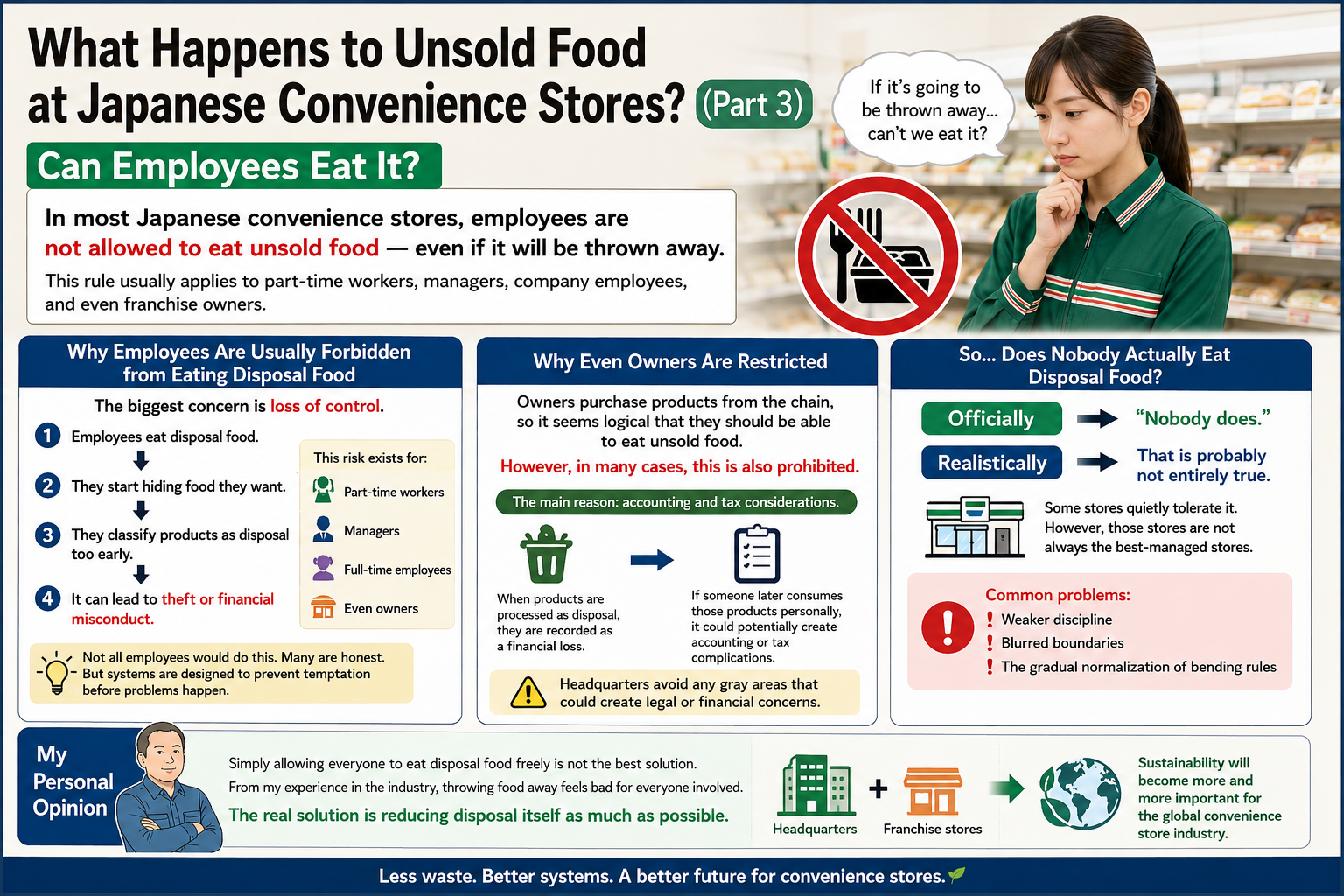
👉 I’d like to talk about the relationship between food disposal and convenience store staff.
Because disposal affects not only profits:
👉 but also employee behavior and workplace culture.
Thank you for reading.
Related Articles
- What Happens to Unsold Food at Japanese Convenience Stores? (Part 1)
Why Japanese convenience stores remove food early and how the disposal system actually works. - What Happens to Unsold Food at Japanese Convenience Stores? (Part 3: Can Employees Eat It?)
The complicated relationship between food disposal, employees, and workplace behavior - The Real Relationship Between Japanese Convenience Store Owners and Headquarters
A behind-the-scenes look at how headquarters pressure and store operations sometimes influence ordering decisions.
コメント