Hello everyone.
Today, I’d like to talk about something most customers never notice about Japanese convenience stores.
Have you ever noticed this while visiting Japan?
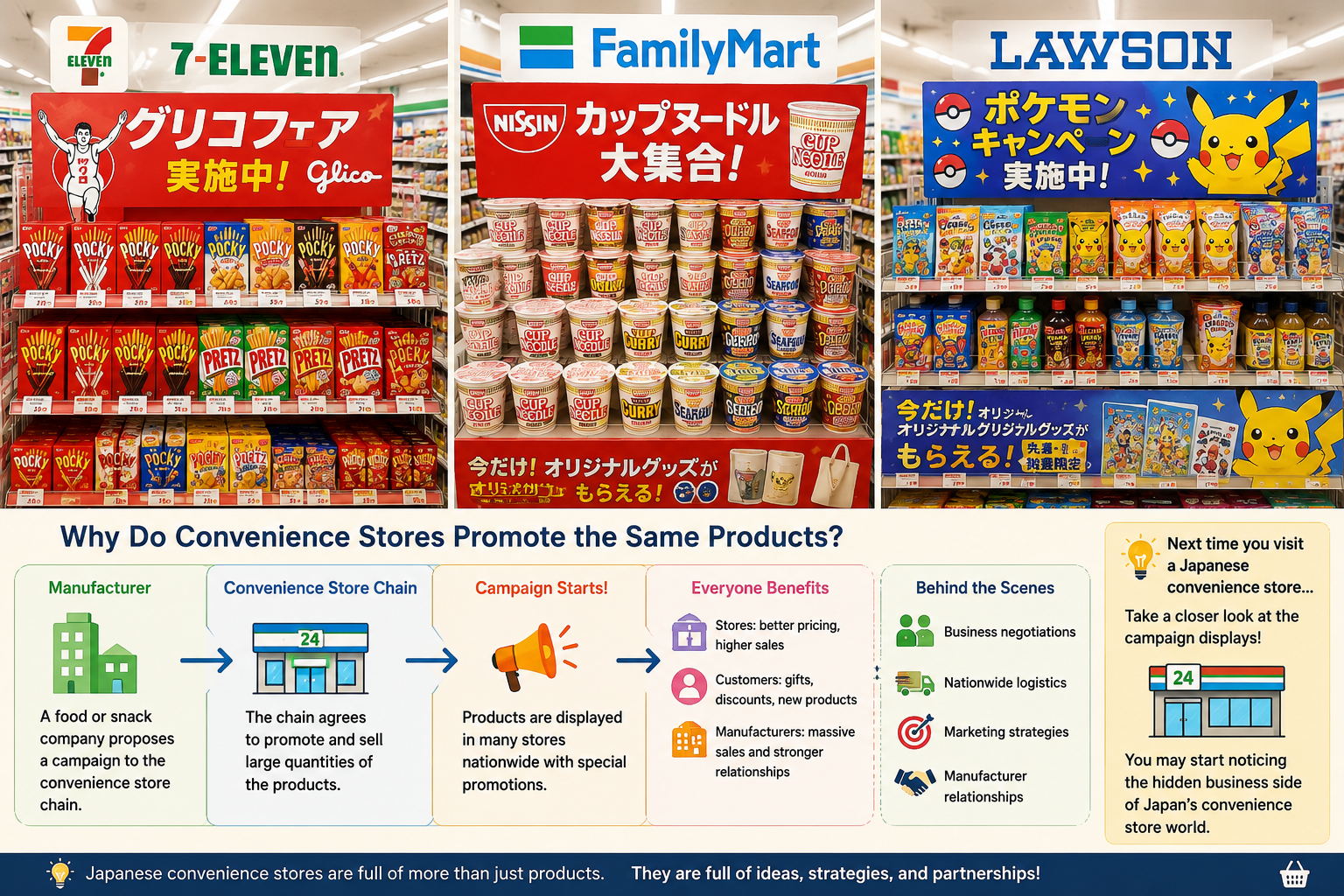
One week, every 7-Eleven suddenly has huge displays of Glico snacks.
At the same time, every FamilyMart seems packed with Nissin cup noodles.
This happens very often in Japanese convenience stores.
So why does this happen?
Manufacturer Campaigns
The answer is simple:
👉 These are usually manufacturer-driven sales campaigns.
For example, a food or snack company may approach a convenience store chain and say:
“If your stores promote and sell large quantities of our products during this campaign period, we can offer special pricing, promotional items, or exclusive deals.”
As a result:
- Stores can purchase products more cheaply
- Customers may receive limited gifts or discounts
- Manufacturers can sell huge volumes nationwide
In other words:
👉 Everyone benefits — at least in theory.
Why Convenience Stores Are Perfect for This
Japanese convenience store chains have enormous nationwide networks.
Because of this, manufacturers can promote products across thousands of stores almost instantly.
That is extremely powerful.
For example, these products can suddenly appear everywhere in Japan almost overnight:
- A new flavor of potato chips
- A seasonal drink
- A limited dessert
- A new cup noodle
- Anime collaboration products
This is one reason Japanese convenience stores always feel fresh and constantly changing.
The Relationship Between Manufacturers and Convenience Store Chains
These campaigns are not only about short-term sales.
They also help strengthen long-term business relationships between manufacturers and convenience store chains.
For example, if a convenience store chain actively promotes a manufacturer’s new product and sales are strong, the manufacturer is naturally pleased.
Over time, this can build trust between both sides.
As a result, manufacturers may later offer:
- Better pricing
- Limited-edition products
- Early access to new items
- Exclusive collaborations
to that particular chain.
So when you see a large campaign at Lawson, FamilyMart, or 7-Eleven, you can sometimes guess which manufacturers currently have strong relationships with that chain.
Looking at Convenience Stores Differently
Most tourists simply notice “a lot of the same product.”
But behind those displays, there are actually:
- business negotiations
- nationwide logistics
- marketing strategies
- manufacturer relationships
all working together behind the scenes.
Once you understand this, Japanese convenience stores become much more interesting to observe.
Next time you visit a Japanese convenience store, take a closer look at the campaign displays.
You may start noticing the hidden business side of Japan’s convenience store world.
Related Articles
- What Is a Directly Managed Convenience Store in Japan?
How Japanese convenience store chains test products and operational strategies through headquarters-operated stores. - What Is a Japanese Convenience Store Shift Like? (Full Guide)
A look at the complex daily operations that support nationwide convenience store logistics. - The Limits of Japanese Convenience Stores
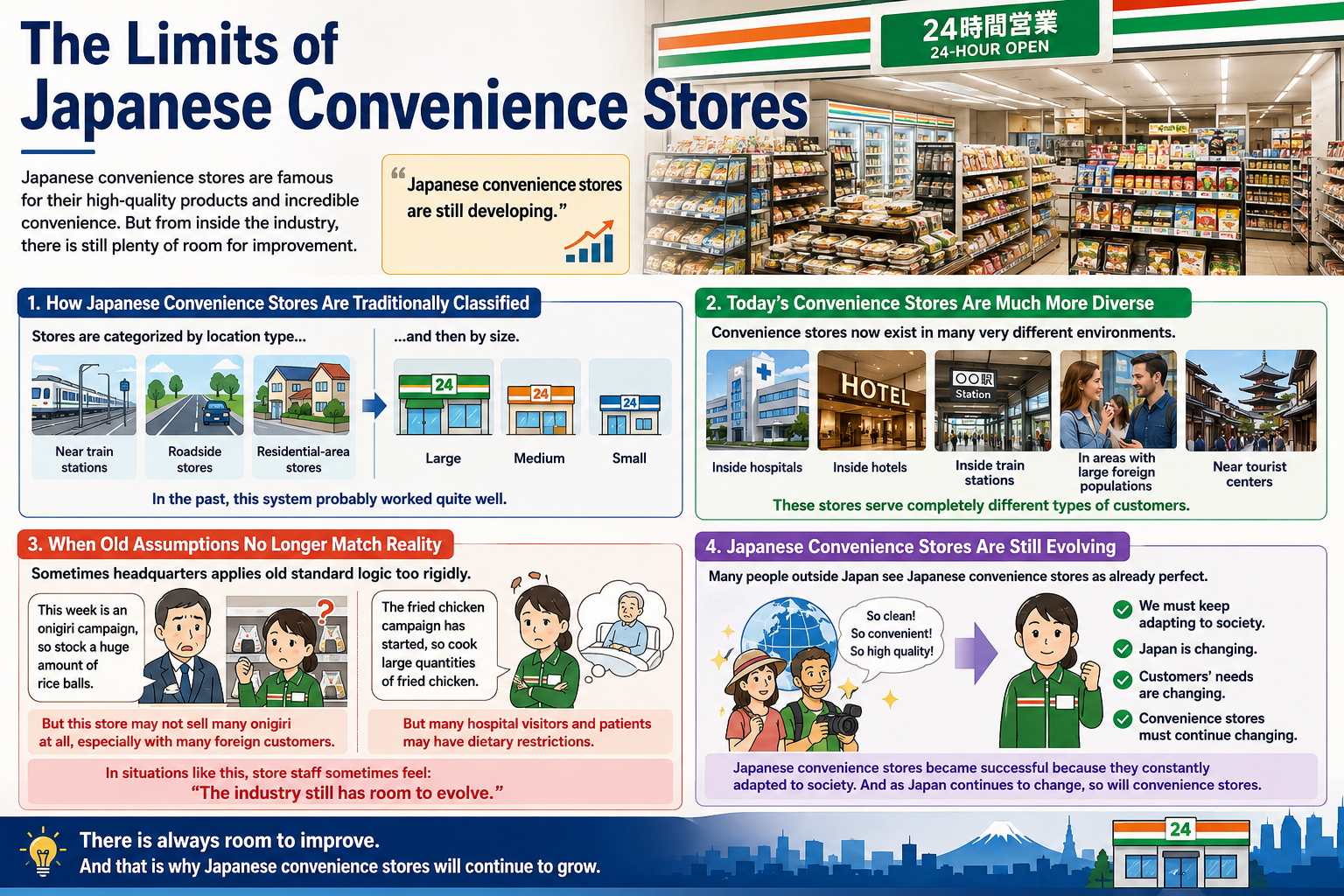
Why traditional convenience store systems are struggling to keep up with modern customer diversity and changing environments.
コメント