Hello everyone.
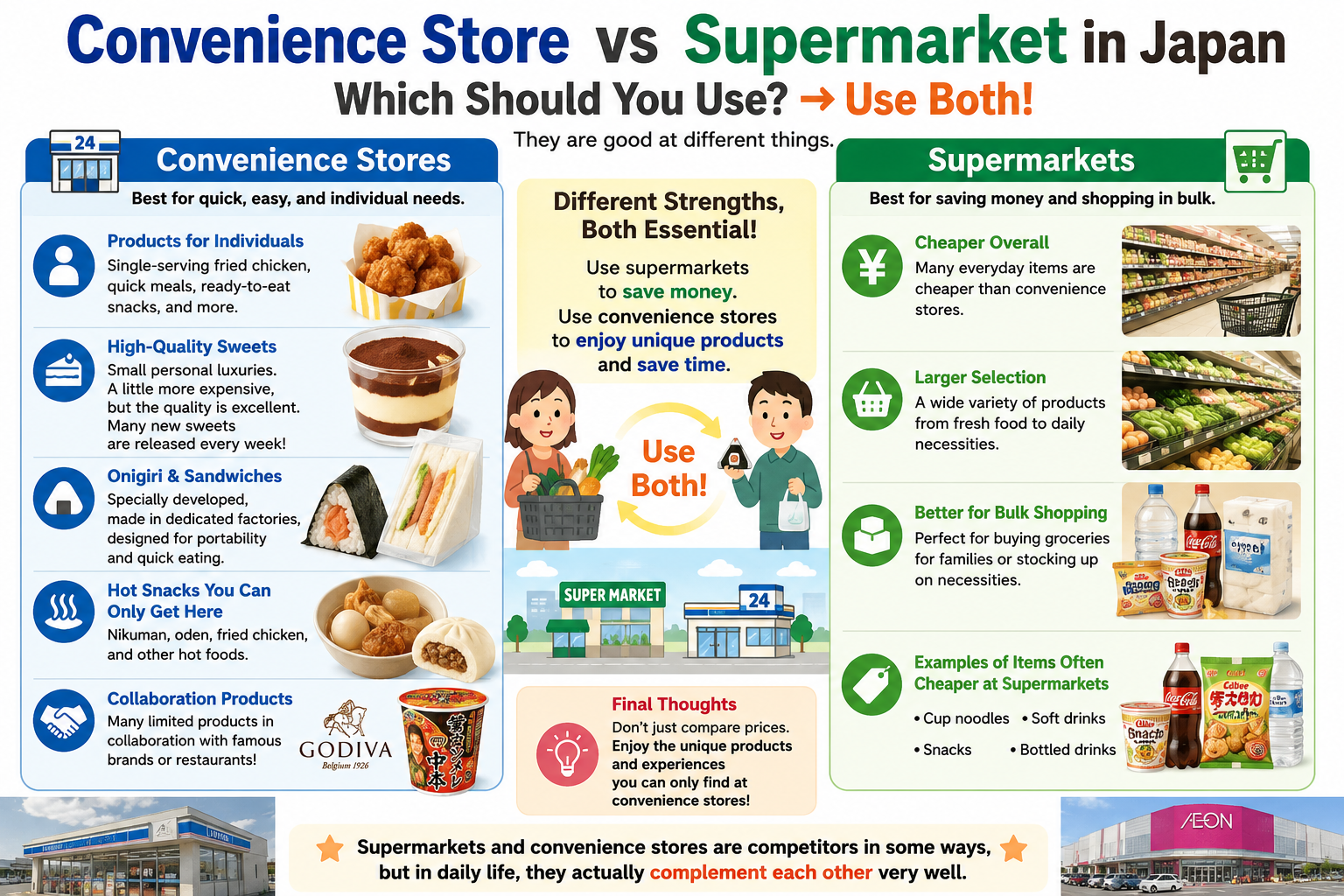
If there is both a convenience store and a supermarket nearby in Japan, which one should you use?
My answer is simple:
👉 Use both.
Why?
Because Japanese convenience stores and supermarkets are designed for completely different purposes.
Supermarkets Are Better for Large Shopping
If you are buying groceries for a family or cooking at home, supermarkets are usually the better choice.
They are generally:
- cheaper
- larger
- better for bulk shopping
For example, products like:
- cup noodles
- soft drinks
- snacks
- bottled drinks
are usually cheaper at supermarkets than at convenience stores.
So if your priority is saving money, supermarkets are often the smarter option.
What Are Convenience Stores Good At?
Convenience stores are strong in areas where supermarkets are weaker.
One major strength is:
👉 products designed for individuals.
For example:
- single-serving fried chicken
- quick meals
- ready-to-eat snacks
Japanese convenience stores specialize in food for people who want something fast, easy, and satisfying.
Convenience Store Sweets
Another major strength is desserts.
Japanese convenience store sweets are surprisingly high quality.
Unlike large supermarket desserts designed for families, convenience store desserts are often:
👉 “small personal luxuries.”
They are usually a little more expensive than supermarket desserts, but the quality is often excellent.
In Japan, many people genuinely look forward to new convenience store sweets every week.
Some limited desserts even become social media trends.
Onigiri and Sandwiches
Convenience store rice balls and sandwiches are also unique.
These products are:
- specially developed for convenience stores
- produced in dedicated factories
- designed for portability and quick eating
Because of this, each convenience store chain develops its own flavors and styles.
Many Japanese people have favorite onigiri or sandwich products depending on the chain.
Hot Snacks You Can Only Get at Convenience Stores
Convenience stores also sell foods that supermarkets usually do not offer.
For example:
- nikuman (steamed meat buns)
- oden
- fried chicken
- other hot snacks
These foods are an important part of Japanese convenience store culture and are definitely worth trying.
Collaboration Products
Another fun part of Japanese convenience stores is collaboration products.
Convenience stores often work together with famous brands, restaurants, or dessert companies.
For example:
- FamilyMart sometimes sells desserts or breads made in collaboration with GODIVA
- 7-Eleven has sold cup noodles supervised by the famous ramen chain “Mouko Tanmen Nakamoto”
Japanese convenience stores constantly release limited-time products like these.
This is one reason many people in Japan visit convenience stores almost every day without getting bored.
Final Thoughts
So when you visit a Japanese convenience store, don’t just compare prices with supermarkets.
Instead:
👉 enjoy the unique products and experiences you can only find at convenience stores.
Japanese supermarkets and convenience stores are competitors in some ways — but in daily life, they actually complement each other very well.
That’s all for today.
Related Articles
- Japanese Convenience Store Fried Chicken (Hot Snacks Guide #1): What’s Safe to Eat?
A guide to popular fried foods and hot snacks sold at Japanese convenience stores. - What’s Inside Japanese Onigiri? (Safe & Vegetarian Options Explained)
An introduction to common rice ball fillings found in Japanese convenience stores. - Why Every Japanese Convenience Store Suddenly Sells the Same Product
How Japanese convenience stores use collaborations and limited-time products to attract customers.
コメント