Hello everyone.
Today, I’ll explain how product deliveries work at Japanese convenience stores.
In Japan, these deliveries are called “nouhin” (納品), which simply means stocking products into the store.
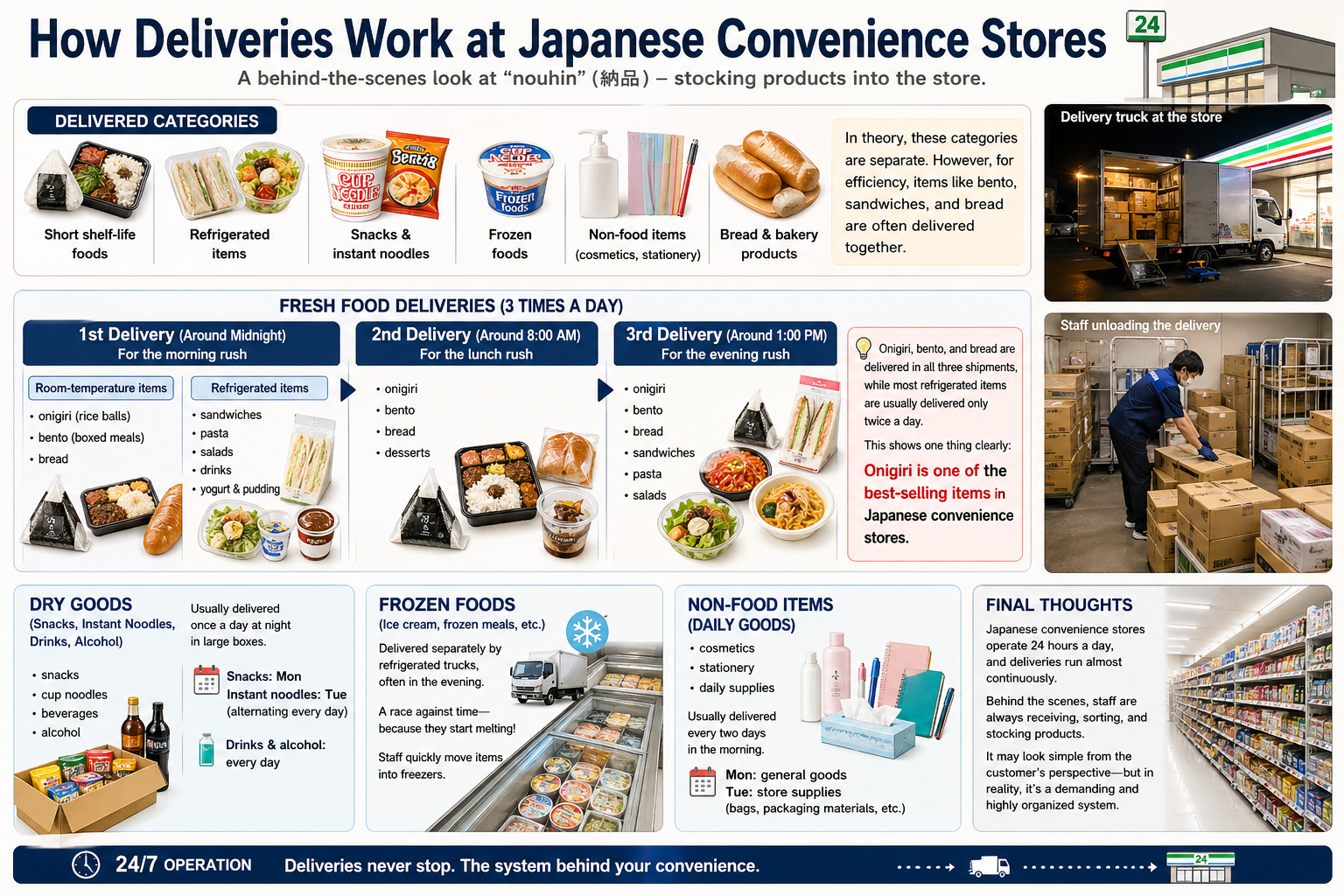
Products are delivered in several categories, such as:
- short shelf-life foods
- refrigerated items
- snacks and instant noodles
- frozen foods
- non-food items like cosmetics and stationery
- bread and bakery products
In theory, these categories are separated. However, for efficiency, items like bento, sandwiches, and bread are often delivered together.
Delivery schedules vary depending on the store and chain, so I’ll explain using my current store as an example.
Fresh Food Deliveries (3 Times a Day)
Items with short shelf lives are delivered three times a day:
- First delivery
- Second delivery
- Third delivery
1st Delivery (Around Midnight)
This delivery prepares the store for the morning rush.
Room-temperature items:
- onigiri (rice balls)
- bento (boxed meals)
- bread
Refrigerated items:
- sandwiches
- pasta
- salads
- drinks
- yogurt and pudding
2nd Delivery (Around 8:00 AM)
This delivery supports the lunch rush.
- onigiri
- bento
- bread
- desserts
3rd Delivery (Around 1:00 PM)
This delivery prepares for the evening rush.
- onigiri
- bento
- bread
- sandwiches
- pasta
- salads
Interestingly, onigiri, bento, and bread are delivered in all three shipments, while most refrigerated items are delivered only twice a day.
This shows one thing clearly:
Onigiri is one of the best-selling items in Japanese convenience stores.
Dry Goods (Snacks, Instant Noodles, Drinks, Alcohol)
Products such as:
- snacks
- cup noodles
- beverages
- alcohol
are usually delivered once a day at night.
Because these items come in large cardboard boxes and take up space, they are handled during quieter hours.
Snacks and instant noodles are often delivered every two days, alternating like this:
- Monday: snacks
- Tuesday: instant noodles
However, drinks and alcohol are delivered every day, because beverages are the top-selling products in most convenience stores.
Frozen Foods
Frozen items like ice cream and frozen meals are delivered separately by refrigerated trucks, usually in the evening.
Once the delivery arrives, it becomes a race against time—because the products start melting.
Staff quickly move items into freezers, prioritizing what can be displayed immediately and storing the rest in the back.
Non-Food Items (Daily Goods)
Items such as:
- cosmetics
- stationery
- daily supplies
are usually delivered every two days in the morning.
For example:
- Monday: general goods
- Tuesday: store supplies (bags, packaging materials, etc.)
Final Thoughts
Japanese convenience stores operate 24 hours a day, and deliveries run almost constantly.
Behind the scenes, staff are always receiving, sorting, and stocking products.
It may look simple from the customer’s perspective—but in reality, it’s a demanding and highly organized system.
Thanks for reading.
Related Articles
- What Is a Japanese Convenience Store Shift Like? (Full Guide)
A behind-the-scenes look at how Japanese convenience stores operate throughout the day. - What Do Convenience Store Register Staff Actually Do?
The many operational tasks convenience store staff handle during busy shifts. - Is Japan Really a “Manual-Based Society”? — A Convenience Store Perspective
Why real convenience store operations depend heavily on experience, timing, and practical judgment.
コメント