Hello everyone.
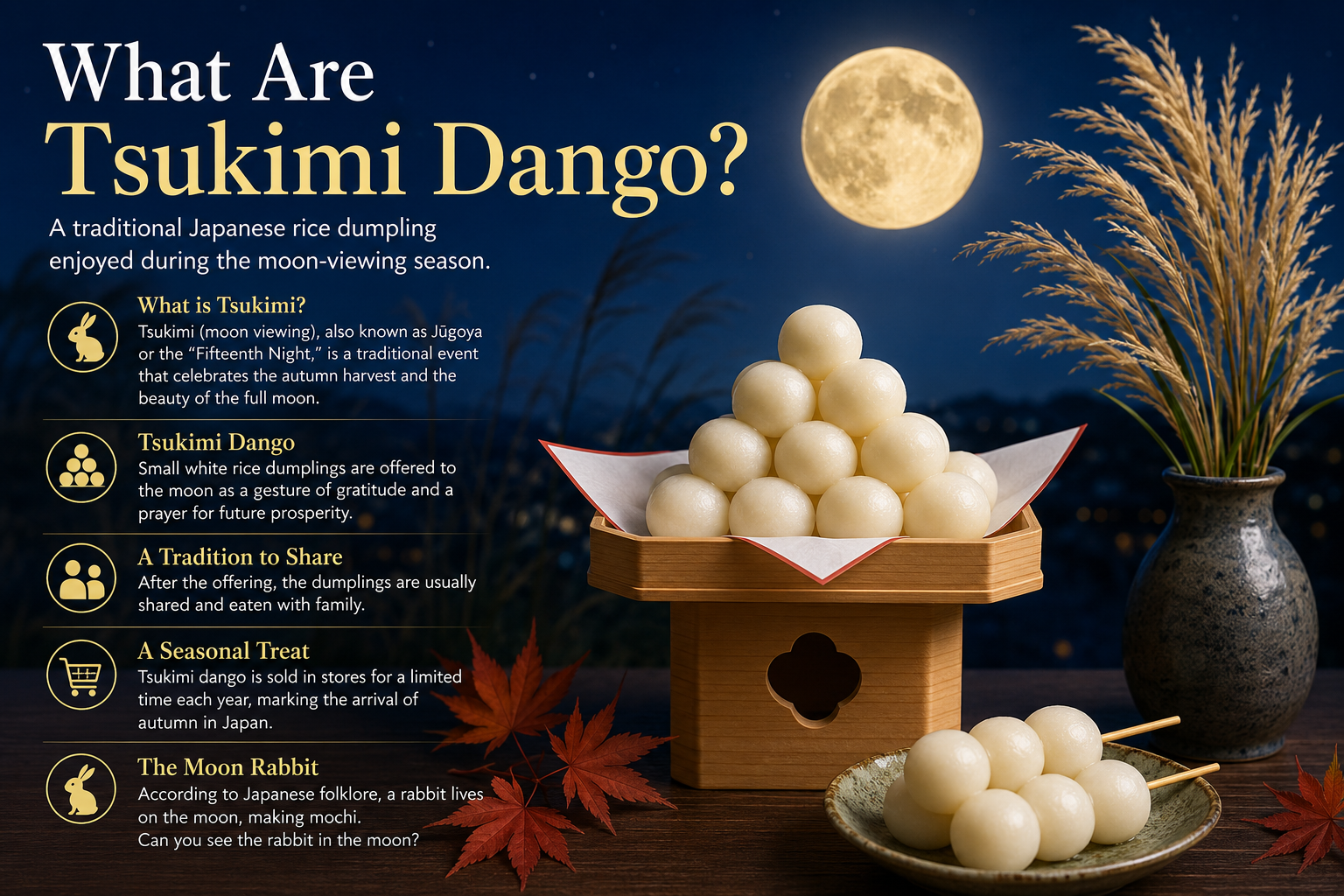
Today, I’d like to introduce a traditional Japanese rice dumpling called tsukimi dango, a seasonal treat that appears in shops during Japan’s moon-viewing season.
Every autumn, Japan celebrates a traditional event called Tsukimi (moon viewing), also known as Jūgoya, or the “Fifteenth Night.”
On this evening, people admire the beautiful full moon while celebrating the autumn harvest.
One of the best-known Tsukimi customs is offering small white rice dumplings, called tsukimi dango, to the moon. This tradition dates back to the Heian period, more than 1,000 years ago, and is believed to have developed as a way of expressing gratitude for a good harvest and praying for prosperity in the coming year.
The number of dumplings varies depending on the region and family tradition. Some families prepare 15 dumplings, representing the fifteenth night of the lunar month, while others prepare a different number.
After the offering, the dumplings are usually shared and eaten by the family.
Today, however, many people simply buy and enjoy tsukimi dango without making an offering. Like many traditional customs in Japan, the religious meaning has gradually become less important, while the seasonal tradition itself remains popular.
One easy way to know that the Tsukimi season has arrived is by visiting a convenience store or supermarket. Around this time of year, you’ll often find tsukimi dango displayed alongside other seasonal products. Japanese sweet shops also begin selling them for a limited time.
Some people probably buy them simply because they are available only during the season, without knowing much about the tradition behind them. Even so, I think it’s wonderful that a custom that began more than a thousand years ago is still part of everyday life in Japan.
In 2026, Jūgoya falls on September 25.
If you happen to be visiting Japan around that time, I encourage you to take a moment to look up at the night sky. The autumn moon is often breathtakingly beautiful.
Finally, I’d like to share one of Japan’s most beloved folk tales.
According to Japanese folklore, a rabbit lives on the moon, making mochi with a wooden mallet. If you look carefully at the full moon, many Japanese people say they can see the shape of that rabbit.
Although the exact origin of this story is unclear, the image of the moon rabbit making mochi has become one of Japan’s most cherished symbols of Tsukimi.
Thank you for reading, and I hope you have the chance to experience Japan’s beautiful autumn moon—and perhaps enjoy some tsukimi dango as well.
Related Articles
👉 Why Dorayaki Is So Popular in Japan (The Real Reason)
Discover another traditional Japanese sweet that remains popular with people of all ages.
👉 November 11 Is Pocky Day in Japan
Learn about another fun seasonal tradition in Japan that appears in convenience stores every year.
👉 Convenience Store Events in Japan: Setsubun
Explore another traditional Japanese seasonal event that is still widely celebrated today.
👉 Wait… Is This Fish?” — The Story of Japanese Fish Sausage
Curious about uniquely Japanese foods? Here’s another cultural food guide for visitors.
👉 The Green Tea at Japanese Convenience Stores Is Not Matcha
Learn the difference between matcha and everyday green tea, and where to enjoy authentic matcha in Japan.

コメント