Hello everyone.
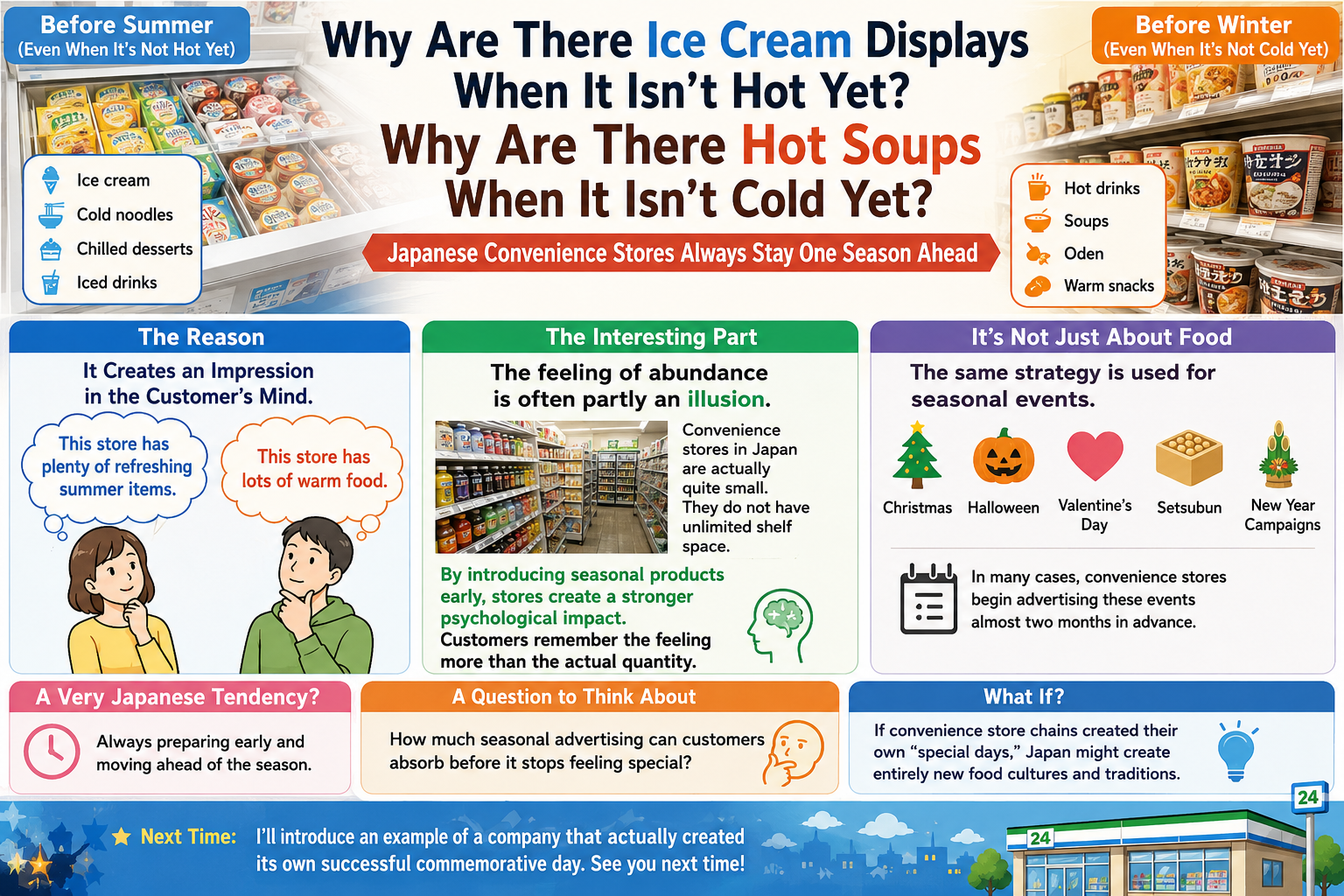
Have you ever walked into a Japanese convenience store and thought:
👉 “Why are they already selling ice cream when it isn’t even hot yet?”
or
👉 “Why are hot soups and warm drinks appearing while it still feels warm outside?”
There is actually a reason for this.
Japanese convenience stores love to stay one season ahead.
Before winter fully arrives, stores begin filling shelves with:
- hot drinks
- soups
- oden
- warm snacks
And before summer truly begins, they start increasing:
- ice cream
- cold noodles
- chilled desserts
- iced drinks
Why?
Because convenience stores are trying to create an impression in the customer’s mind.
When customers repeatedly see warm products before winter arrives, they subconsciously begin thinking:
👉 “This store has lots of warm food.”
Likewise, when cold products appear early, customers begin to feel:
👉 “This store has plenty of refreshing summer items.”
And here is the interesting part:
👉 Convenience stores are masters at creating the illusion of abundance.
Japanese convenience stores are actually quite small.
They do not have unlimited shelf space.
However, by introducing seasonal products earlier than expected, stores create a much stronger psychological impression.
Customers often remember the feeling more than the actual quantity.
This strategy is not limited to food.
The same thing happens with seasonal events such as:
- Christmas
- Halloween
- Valentine’s Day
- Setsubun
- New Year campaigns
In many cases, convenience stores begin advertising these events almost two months in advance.
Personally, I sometimes feel this reflects a very Japanese tendency:
👉 always preparing early and moving ahead of the season.
However, nowadays this strategy is no longer limited to convenience stores.
Supermarkets, department stores, and shopping malls in Japan all use the same method.
Because of this, I sometimes wonder:
👉 “How much seasonal advertising can customers absorb before it stops feeling special?”
Honestly, I think it would be more interesting if convenience store chains created completely original seasonal events instead of relying only on existing holidays.
If every chain invented its own “special day” and promoted it heavily, Japan might eventually create entirely new food cultures and traditions.
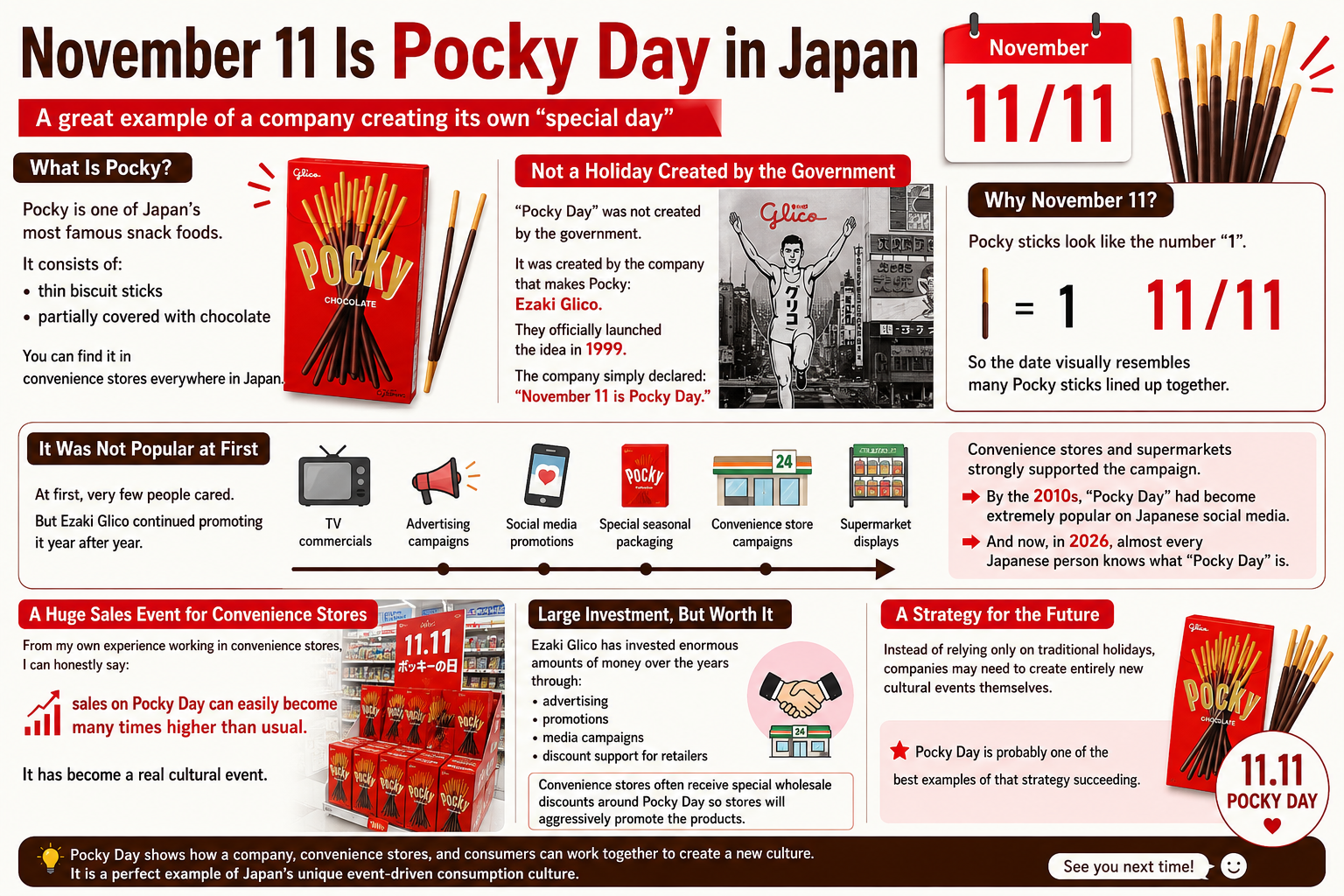
Next time, I’d like to introduce an example of a company that actually created its own successful commemorative day.
See you next time!
Related Articles
A Special Convenience Store Event in Japan: Unagi Day
How convenience stores turn traditional seasonal foods into major nationwide sales events.
Why Every Japanese Convenience Store Suddenly Sells the Same Product
How manufacturers and convenience store chains create nationwide promotions and seasonal sales events.
Convenience Store Events in Japan: Setsubun
A uniquely Japanese seasonal tradition that convenience stores heavily promote every year.
コメント