Hello everyone.
Today, I’d like to talk about something that may sound a little shocking:
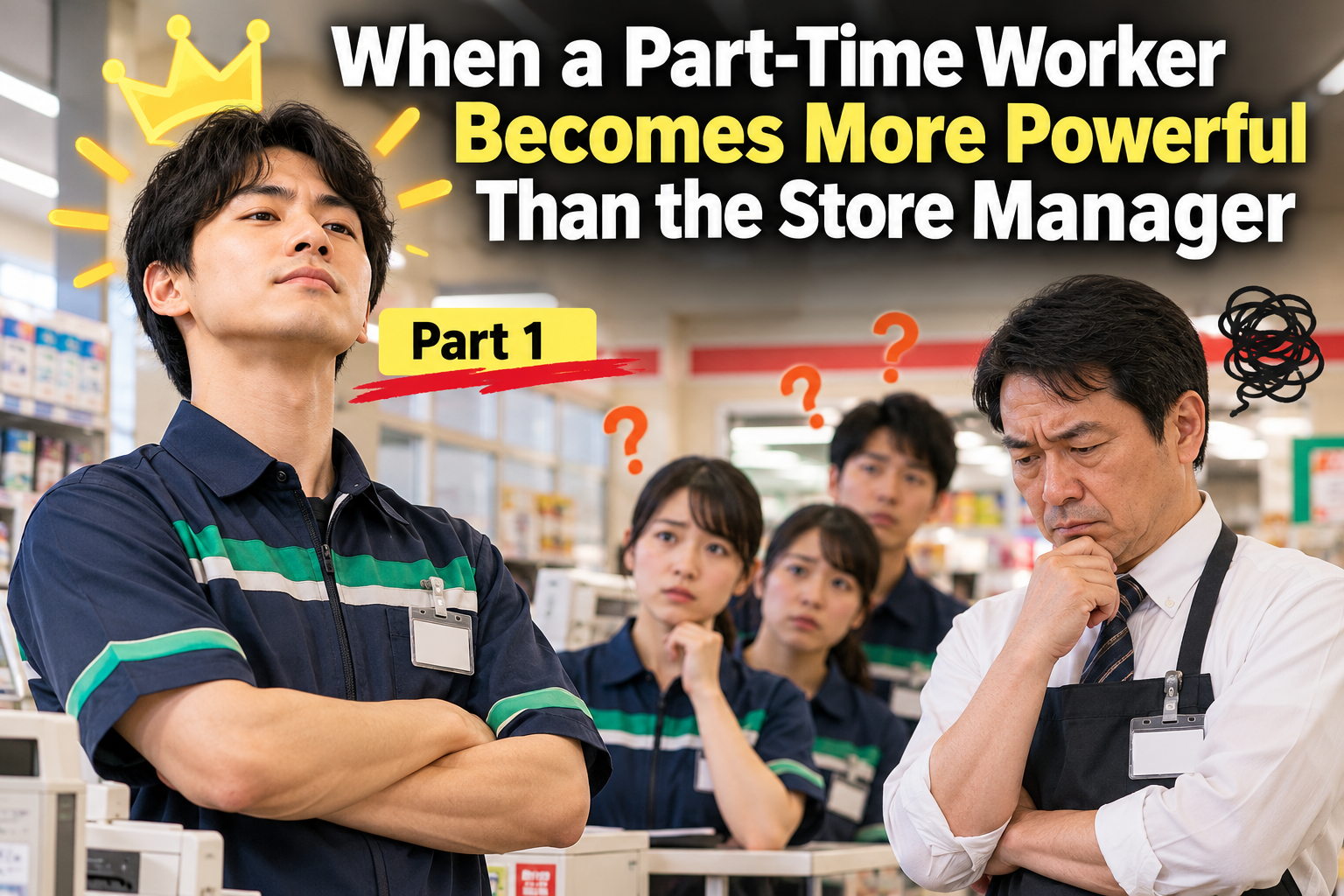
What happens when a part-time worker becomes more powerful than the store manager?
The title may sound dramatic, but in my experience, some version of this situation can happen in many convenience stores.
Most stores have a few key part-time workers who play an important role in daily operations.
They know the store well. They can handle difficult situations. New employees ask them questions. Sometimes, even the store manager depends heavily on them.
Having such experienced workers is normally a great advantage.
But depending on how the store manager and the company treat them, there can be two very different outcomes.
A strong part-time worker can develop into a future manager.
Or that person can gradually become what I call a “monster part-timer.”
- The Good Path: A Future Store Manager
- The Dangerous Path: Creating a “Monster Part-Timer”
- “Why Am I Doing the Manager’s Job?”
- And the Manager Starts to Fight Back
- Everyone Else Gets Caught in the Middle
- A Convenience Store Is a Very Small Organization
- Authority and Responsibility Must Match
- Strong Stores Need Strong Managers and Strong Staff
- Related Articles
The Good Path: A Future Store Manager
Let’s start with the positive outcome.
Imagine a highly capable part-time worker.
The company recognizes that person’s ability and gives them appropriate responsibilities.
The manager praises them when they do something well, but also corrects them when necessary.
Most importantly, there is still a clear relationship between responsibility and authority.
The store manager remains the manager.
The part-time worker is given opportunities to grow without being expected to unofficially take over the manager’s job.
If this relationship is managed properly, the employee can gain experience, earn the respect of other staff members, and perhaps eventually become a store manager.
The employee grows, and the company gains a valuable future manager.
It’s a win-win situation.
The Dangerous Path: Creating a “Monster Part-Timer”
The second outcome is much more complicated.
This can happen when a store manager lacks experience, management ability, motivation, or confidence.
Suppose there is a very capable part-time worker in that store.
At first, there may be no problem at all.
The worker is simply good at the job.
So the company gives them a little more responsibility.
Then a little more.
And a little more.
Eventually, other employees start asking that person for instructions instead of asking the manager.
The company may also begin giving important tasks directly to the part-time worker because they know that person will get the job done.
Before anyone realizes it, something strange has happened:
The official manager is still the manager, but the part-time worker has become the unofficial manager.
This is where serious problems can begin.
“Why Am I Doing the Manager’s Job?”
Think about the situation from the part-time worker’s perspective.
They may start thinking:
“Why am I doing all of this as a part-time employee?”
They are solving problems.
They are training staff.
They are making decisions.
Other employees depend on them.
Sometimes, they may even be doing work that the manager should be doing.
But the manager has the title, authority, and higher salary.
Naturally, frustration can grow.
The worker may eventually think:
“I’m better at this job than my manager. Why should I listen to them?”
Respect for the manager begins to disappear.
Eventually, frustration can turn into contempt.
And the Manager Starts to Fight Back
Now look at the situation from the manager’s side.
The manager notices that other employees depend more on the part-time worker.
Perhaps staff members listen to that person more carefully.
Perhaps the company itself trusts the part-time worker with important tasks.
The manager may begin to feel threatened.
Instead of recognizing the underlying management problem, the manager may start seeing the part-time worker as the source of all the trouble.
Now both sides resent each other.
The part-time worker thinks:
“The manager is incompetent.”
The manager thinks:
“This employee is destroying my authority.”
At this point, the biggest victims are often neither of them.
They are the other employees.
Everyone Else Gets Caught in the Middle
Imagine working in a small convenience store where the manager and the most influential part-time worker dislike each other.
Whose instructions should you follow?
What happens if they tell you different things?
What happens if agreeing with one person makes the other person angry?
The workplace gradually divides into factions.
Communication becomes difficult.
People become uncomfortable.
Good employees may decide that the workplace is no longer worth the stress and leave.
Customers may not understand exactly what is happening behind the counter, but they can sometimes sense when a workplace has a bad atmosphere.
In my experience, these internal conflicts can eventually affect the entire store.
A Convenience Store Is a Very Small Organization
This is important because convenience stores are usually small workplaces.
Many stores operate with only around a dozen or so staff members.
That means one serious conflict can affect a large percentage of the entire team.
I sometimes compare a convenience store to a small military unit.
The point isn’t that convenience stores should operate like the military.
The point is that a small team needs a clear chain of command.
Imagine a unit where the official commander gives one order while an experienced soldier gives another.
Even if that soldier is extremely capable, having two competing centers of authority creates confusion.
A convenience store can face the same organizational problem.
Authority and Responsibility Must Match
That’s why I believe the store manager should remain the clear center of authority.
But there is another side to this.
A company shouldn’t simply give someone the title of manager and expect everyone else to obey them.
If a manager lacks the necessary skills, the company needs to train and support that person.
If the situation still doesn’t improve, the company needs to address the management problem itself rather than quietly transferring more and more of the manager’s responsibilities to a capable part-time worker.
Otherwise, the company may think it has found a cheap solution:
A part-time employee doing management-level work for part-time wages.
But in the long run, that arrangement can create resentment, conflict, and instability.
Strong Stores Need Strong Managers and Strong Staff
A highly capable part-time worker is not the problem.
In fact, such workers are extremely valuable.
The problem begins when responsibility, authority, position, and compensation become badly unbalanced.
The ideal situation is simple:
A capable manager leads the store, while capable part-time workers support the manager and are given opportunities to develop their own skills.
A strong manager does not need to fear talented employees.
And talented employees should not have to become unofficial managers just to keep the store running.
When those roles are clear, everyone can benefit.
But what happens when they aren’t?
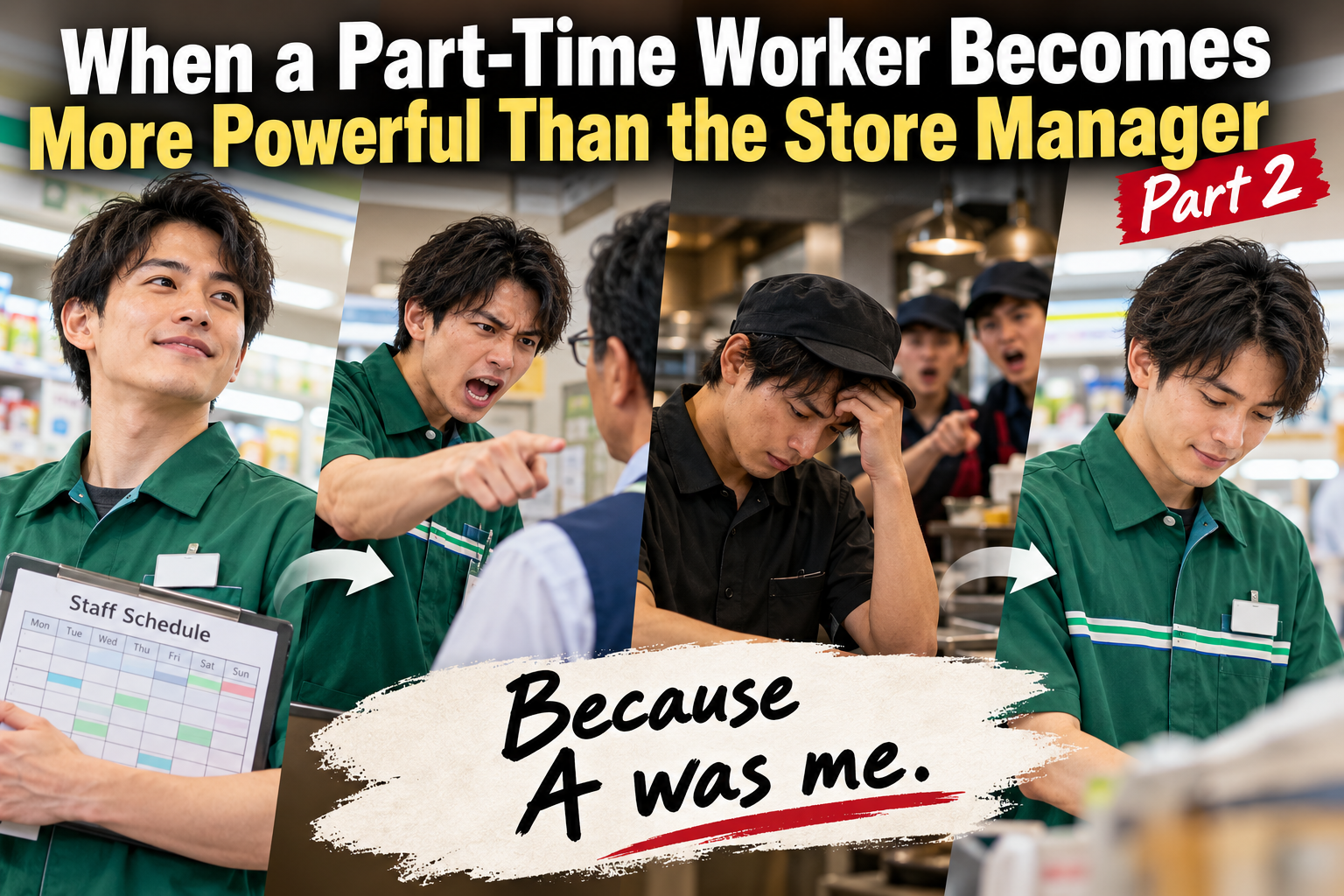
I’ve seen what can happen when a part-time worker gains too much unofficial power.
In Part 2, I’ll tell you about one such case—and how it ended.
That’s all for today.
Thank you for reading.
Related Articles
👉 What Does a Convenience Store Manager Actually Do? (Part 3) — Training Staff
Learn how convenience store managers train employees and why developing strong staff requires proper leadership.
👉 What Does a Convenience Store Manager Actually Do? (Part 4) — Labor Cost and Shift Management
Discover how managers balance staffing costs with the need to maintain a stable and effective team.
👉 What Does a Japanese Convenience Store Manager Actually Do? — A Complete Guide
What does a convenience store manager actually do? Take a look at the responsibilities behind the title.
👉 「Who Gets Hired at a Japanese Convenience Store? 4 Types of Hiring Managers」
See how different hiring philosophies can shape the entire workplace long before conflicts begin.
👉 The Dark Side of Convenience Store Management in Japan — A True Story From 25 Years Ago
Read another story about what can happen when workplace authority is used badly inside a convenience store.
コメント